Categories
Book reviews

T. M. Gaouette’s For Eden’s Sake (2019)

Image credit: https://tmgaouette.com/books/for-edens-sake/.

Unlike cheesy and ultra-pious “Christian” fiction, Gaouette’s novel depicts a young couple who, in a drunken stupor, banged each other in a one-night stand and whose resulting abortion decision is handled realistically.

I feared that this novel would be yet another “religious” work fictionalizing abortion with lots of “come to Jesus” moments and citations and transcriptions of Scripture galore.

Buzzer!  The author must have read Dana Gioia’s The Catholic Writer Today and Other Essays (Wiseblood Books, 2019), wherein he writes that “Catholic literature is rarely pious.  [….]  Catholic writing tends to be comic, rowdy, rude, and even violent” (20).  Whether the book is as naughty as the opening paragraph of this review, I leave to the reader; “Having just left her asleep in the crumpled bed I’d risen from” (4) is perhaps the naughtiest line in the entire work, and that ain’t saying much.

But, since this is not a college English class lecture and a book review meant for social media and not scholars (whom no one reads anyway), I digress…

Gaouette’s ability to render her characters realistically could lead the reader to miss some important polarities and deeper philosophical ideas which practitioners of old-fashioned literary criticism used in colleges and universities before the woke nonsense replaced solid literature analysis with Democratic Party political activism, such as pro-abortion agitprop and anti-Semitism.

For example, archetypal literary critics could spend some time examining why the main characters are named Isaac Prince (twenty-two years old) and Rebecca Stratham (nineteen) and why their child is named Eden, especially since the novel does not explain the religious significance.  (Remember: it isn’t a preachy religious tract.)

A deconstructionist literary critic might discuss the evident “polarities” represented by the characters to somehow “undermine” or “destabilize” the “meaning” of the “text” (such buzzwords to say that a decon critic wants to destroy what an author tries to communicate!).

For example, Isaac obviously lives his religious upbringing—he is not ashamed to confess his sin of fornication in the Sacrament of Reconciliation early in the novel (10ff)—while Rebecca seems to be bereft of any type of religious training.  Isaac comes from a functioning two-parent heterosexual family, while Rebecca’s family dynamics are unknown, the exception being a materialistic and emotionally cold father.

Even the friends of these two main characters function as polarities.  While rural boy Isaac relies on his childhood buddy and brother-in-faith Kevin to help him navigate the responsibilities of adulthood in the big city, Rebecca’s pal is the so-called pro-“choice” (that is, abortion-loving) and aggressive Tess.  That Tess’ abortion is disclosed only towards the end of the novel accounts somewhat for her intolerance of pro-life ideas and persons (hence her disgust and hatred of Isaac, whom she derides for his “patriarchal” care for both Rebecca and the unborn child), but she remains a flat and (worse) an unlikeable character.

A feminist literary critic could explore the evident patriarchal oppression of women and other now ridiculously outdated tenets of traditional political feminism by determining if Isaac is indeed oppressing Rebecca with the power of his phallus or otherwise dominating her with his heteropatriarchy or similar nonsense that most students merely laugh at behind their Women’s Studies professors’ backs.

A gay and lesbian literary critic might have some material to work with to justify a weird and utterly false interpretation of the novel.  Hmmm…Isaac and his best buddy Kevin share an apartment together?  Fishy.  They were boyhood “friends”?  Doubly fishy.  Similarly, Rebecca and her friend Tess also share an apartment?  Triply fishy.  Tess is more a domineering (over Rebecca) masculine type while Rebecca is ever so girly?  Quadruply fishy!  However, beyond these preliminary salacious suggestions, a gay and lesbian critic would be as effective in analyzing the novel as a deconstructionist critic would provide help to rabbinical scholars explicating the Babylonian Talmud to understand what God meant by the lex talionis.

Sidebar here, touching on masculinist literary criticism, designed for heterosexual men.  Chapter 11 (127ff) wherein Isaac and Kevin go shopping in a store for baby items is wonderful comic relief.  What likeable dumbasses!

A Marxist literary critic would revel in the clash of ideologies represented by the polarities of the life-affirming Isaac and the stridently anti-life so-called “feminist” Tess (“feminist” in quotation marks, since a genuine feminist would support the life of the unborn child and reject abortion, as the nineteenth century founders of the American feminist movement advocated).  Also, since Marxist literary criticism delves into financial aspects of literature, examining the power of money and other transactions that Isaac presents to Rebecca in order to save the child from being killed in abortion would constitute a wonderful literary analysis paper…for a pro-life English professor, that is.

Fortunately, students of literature and the general reading public can reject the above tired literary theories and realize the worth of Gaouette’s novel through the perspective of right-to-life literary criticism, for which I formulated five questions.

1.  Does the literary work support the perspective that human life is, in the philosophical sense, a good, some “thing” which is priceless?

Gaouette’s work illustrates the pricelessness of human life admirably and, in contrast to pro-abortion novels which read more as ideological essays than fiction, does so without hearkening to pro-life responses to anti-life diatribes against the first civil right to life.  The appreciation of human life as a good in itself is particularly manifested by Rebecca, who achieves a life-affirming position in a calculus of actions to be explored further below.

2.  Does the literary work respect the individual as a being with inherent rights, the paramount one being the right to life?

A surface reading of Gaouette’s novel would not answer this question affirmatively since it is not preachy.  The reader can, however, determine an answer by examining the reactions of those who devalue human life or aspects of our humanity which everybody should support.  Here, again, Tess is the obvious catalyst to help readers understand how an anti-life philosophy manifests itself; furthermore, by contrast, the reader can appreciate the human lives whom she degrades.

For example, Tess does not think highly of pro-lifers—a litotes if there ever was one!  She reduces Isaac to “this moron” whose intent in trying to save the child from abortion is “all about taking away our reproductive rights” (34).  The universe of pro-life persons she similarly reduces negatively as in the following falsity: “Typical pro-lifer.  Cares only about the fetus when it’s inside the woman.  Then they forget all about them when they’re born.  They let them suffer then, don’t they?” (82).

3.  If the literary work covers the actions of a family, does it do so respecting heterosexual normativity and the integrity of the family?

Sorry, not sorry, gay, lesbian, and transgender zealots who see the LGBTQ distortion of heterosexual normativity in every work of fiction.  Gaouette’s work doesn’t cater to such a warped sense of human sexuality as most publishers demand of their authors to be politically correct.  Isaac is a real man, “soft eyes, strong physique, and manly features” (105) whose sperm do their job on the first try.  Rebecca is stereotypically feminine and womanly, not pink haired, studded with nose and tongue rings, wearing amorphous gender-free clothing, or willing to kill unborn human life.

Moreover, while Rebecca suffers from a broken family structure (her mother died when she was apparently a little girl “all those years ago” [32]), Isaac can rely on both of his parents to support him in his efforts to, first, save the life of the unborn child whom he created with Rebecca from abortion and, second, to raise their daughter on his own after her birth.

Further, Isaac’s parents’ reactions to his paternity are realistic and not preachy as some ideology-driven, albeit pro-life, fiction might render them.  For example, the father’s reaction to the announcement that Isaac is a daddy—and (remember from the first paragraph of this review) became one by screwing a chick in a one-night stand in a drunken stupor—is utterly honest:

After what seemed like forever, he stood.  “I’m going to bed,” he said.  “And I think you should do the same.”  He lifted the jug and shuffled to the fridge.  After shutting the door, he turned to me.  “We can talk in the morning.”  He headed out of the room.  (41)

Wouldn’t a father react with such speechlessness and tiredness if the son he thought was such a “good boy” seemed to fuck up his life?

4.  Does the literary work comport with the view that unborn, newborn, and mature human life has an inherent right to exist?

The range of responses to this question moves from Isaac’s consistent support for the life of the unborn child despite the impact that caring for the child would have on his own life, Rebecca’s, or his parents’ lives to Tess’ equally consistent perception of the unborn child as, in the customary feminist distortion of life, a roadblock to Rebecca’s success or merely another opportunity for the exercise of male power over the life of yet another woman.

Most significantly, while her belief in the perspective that human life is a philosophical good, which has been hinted above, Rebecca’s affirming the life of the unborn child has been accomplished in a lengthy trajectory.  The calculus of life-affirming steps moves from her being a character assertive in her right that “fortunately, for me, it’s my body, Isaac.  You guys don’t get a choice” (22; italics in original), to someone who nonchalantly uses pro-abortion dehumanizing language to refer to the unborn child as when she calls her “the parasite that was growing within” (54), to one who becomes aware of the child’s humanity through ultrasound images, and eventually to one who provides a gift to the child after birth, knowing that Isaac has committed to raising their daughter himself (a gift given before the novel’s denouement, not to be spoiled here).

Thus, unlike the flat character Tess, Rebecca is eminently more of a round character than Isaac, having come to this heightened character status through acceptance of a series of life-affirming principles showing the “perspective that human life is, in the philosophical sense, a good, some ‘thing’ which is priceless”, which ineluctably leads Rebecca to accept “that unborn […] human life has an inherent right to exist”—an impossible task to accomplish in anti-life fiction.

Moreover, Isaac and Tess are not the only ones who hold firm positions on the value of unborn human life.  Many other minor characters are worth studying, such as the nurse operating the ultrasound who comments approvingly on the unborn child’s development, especially the heartbeat, or Isaac’s parents, who are committed to assist Isaac and the child once she is born, or Isaac’s birth mother.

5.  When they are faced with their mortality, do the characters come to a realization that there is a divine presence in the world which justifies a life-affirming perspective?

This last question of right-to-life literary theory cannot be answered definitively since the characters are still in their youth and their lives together as an integral family are not fulfilled chronologically.  The reader can conjecture, however, that at least one of the characters, Isaac, maintains the religious principles of his parents especially when he exults in the preciousness of his daughter’s life vis-à-vis God’s creation:

“Eden,” I whispered.  It just came to me and it was so fitting, because everything God created was perfect.  And hearing me speak her name sent another wash through me, the emotion leading to a tightness in my throat.  And I only managed to whisper, “It’s Daddy.”  (163)

In contrast, although she seems to acknowledge a religious foundation for life, as evidenced by her purchasing an overtly Catholic religious necklace for her daughter, Rebecca’s acknowledgement of the divine presence in the world is superficial at best.  After all, buying a religious item for someone else can hardly substantiate that the person him- or herself has recognized “a divine presence in the world which justifies a life-affirming perspective”; it may, at least, suggest her openness to such a philosophical foundation.

At 180 pages, Gaouette’s novel is a quick and enjoyable read.  Since Amazon collaborates with cancel culture and woke zealots and bans conservative and pro-life books, buy this book directly from the publisher: https://tmgaouette.com/book-store/.

Categories
Book reviews

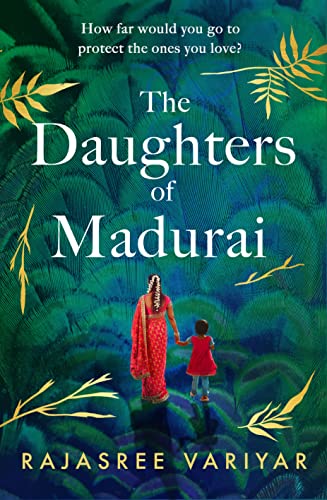
Rajasree Variyar’s The Daughters of Madurai (Union Square, 2023)

Image credit: Goodreads.com

Abortion zealots who also support the killing of newborn girls (infanticide) will censor this novel for its life-affirming message, so read it now.

Variyar has written a well-developed narrative of an Indian mother’s effort to save her newborn daughter from being killed for the “crime” of being born a female.  While the pro-life world knew about female infanticide in India for decades, this novel may shock ignorant American readers (I know, I know…that’s a redundancy) and should help feminists (the genuine ones, that is, which means pro-life feminists) advocate for the lives of their newborn sisters as much as they fight for the lives of their unborn sisters in danger of being killed by abortion.

The structure of Variyar’s novel is especially interesting for its inclusion of fetological facts preceding key chapters, which function not only as guides for the development of the infanticide narrative, but also as teaching tools for readers who are ignorant of the development of an unborn child.  This is especially important in today’s culture when high school and college students are indoctrinated by leftist and woke ideas about unborn life instead of being taught subjects they should know, like grammar or Chemistry.

The combined fetological notations are, thus, an education in the life of an unborn child:

Chapter 6: “The first month / Now her mouth, lower jaw, blood cells, and circulation develop. / She is the size of a grain of rice” [61].

Chapter 7: “The second month / Now her heart has formed.  Fingers and toes webbed like a frog’s. / The sketch of features—eyes, ears, mouth, nose. / She is the size of a gooseberry” [76].

Chapter 9: “The third month / Now her tail has disappeared. / Her fingers and toes have lost their webbing and gained their nails. / She is plum-size” [106].

Chapter 11: “The fourth month / Now her face moves, smiles, frowns. / She hears the sound of her mother’s heartbeat” [133].

Chapter 12: “The end of the fourth month / There are nails on her tiny fingers and toes. / Her teeth and bones are strengthening. / She is the size of a mango” [152].

Chapter 13: “The fifth month / The skin on her fingertips swirl into prints. / She begins to move her limbs.  Her mother feels her flutter” [166].

Chapter 15: “The sixth month / Now she hears the lullaby her mother sings to her sister. / It soothes her.  She has hair and lashes of white. / Her skin is flushed pomegranate-red” [198].

Chapter 16: “The seventh month / Now she twists and turns in her mother’s womb. / Her tiny fists open and close at the sound of her mother’s voice. / Her heartbeat calms” [215].

Chapter 17: “The eighth month / Now her eyes can focus.  Her wrinkles are smoothing over her baby fat. / She is the size of a cabbage” [225].

Chapter 19: “The end of the ninth month / Now she is chubby with fat, and her bones have hardened. / Her home is too small for her, holding her close and warm. / She reaches for the world’s embrace” [248].

For committing the crime of humanizing the unborn child, Variyar’s novel will certainly be condemned by abortion zealots and their fellow gang members, those who support infanticide, the killing of newborns.  It behooves the rest of us who are civil rights activists and pro-life readers (same thing) to enjoy her work.

Of course, the novel is more than a transcription of fetological facts about an unborn child’s development.  It is a frightening study of the depths which humans reach when they devalue the lives of fellow human beings.

Pro-lifers, of course, know that the devaluation of human life occurs, first, linguistically when any stage of human life is reduced to animal or non-human imagery.  Thus, a pro-life reader would know that the grandmother who calls Janani’s newborn girl “The useless thing” (5) and, later, urges her to “‘get rid of it’” (113) practices standard dehumanization before a human life is killed.

Since there is such a thing as post-abortion syndrome (PAS), the novel includes several passages which illustrate what could be labeled post-infanticide syndrome (PIS, an unfortunate acronym which could distract from the seriousness of the matter).  For example, Janani speculates that “In this quietness, she felt as though she could feel spirits lingering, hear little feet on the hard dirt” [19] and that, of her two daughters who were killed, “What would the other two look like now, if they had been allowed to live?” (21).  Her post-infanticide speculation is not merely a one-time event, for it continues throughout the novel.  Janani imagines “two other little bodies beside this one”, her living daughter’s body (62).  Janani reflects that “Her second girl, Lavanika’s first little sister, would be about the same age” (70).

Besides anti-life language used to dehumanize the unborn and newborn child, the novel illustrates the dehumanizing effect of the absence of heterosexual marriage, especially as understood in the Jewish and Christian West (remember that the setting for the novel is Hindu India).  Janani’s husband, for example, does not respect either himself or his wife when he has sex with a whore.

The distortion of the heterosexual union by a life-denying philosophy affects more than the husband and wife, of course.  It is shameful that Janani’s mother-in-law speaks thus about the Indian government’s effort to save newborn baby girls from infanticide by offering “baby cradles” (comparable to safe-baby schemes in the United States) for the peasants: “Can you imagine the shame?  Not being able to decide the fate of your own child?  Giving it up, just like that.  They won’t be able to hold their heads up” (75).  This character certainly does not fit the stereotypical grandmother, a loving older woman, ready to bake cookies for her grandbabies when they visit Grandma.  She’s a killer.  Only in a culture which thinks infanticide is the norm would an effort to save newborn babies from being abandoned or killed be shameful.

If only India would someday convert to Christianity en masse not only to protect unborn and newborn lives, but also to secure the self-respect which should obtain between men and women.

Some final reductionist paragraphs from the main character may be a sufficient first step in India’s move from a life-denying philosophy to a life-affirming one.  Nila interjects a couple of paragraphs about “the millions of girls who are missing from India’s population.  Girls smothered and poisoned and drowned and buried alive.  Girls that never emerge from their mother’s wombs” (323-4).

One flaw in the narrative is the inclusion of an unnecessary lesbian relationship.  While one may presume that the lesbianism was forced on the author because that’s what publishers expect under the politically incorrect regime of the LGBTQ distortion of sexuality, there is truly no need for the narrator Nila to develop a lesbian relationship with a woman named Iphigenia.  It would be interesting to speculate that the lesbian relationship that the narrator values is a direct effect of the distortion of how a heterosexual marriage should be lived, but studying or justifying the intrusion of an LGBTQ element must be relegated to future research by an enterprising young student of literature for a woke professor’s literature class.

Categories
Book reviews

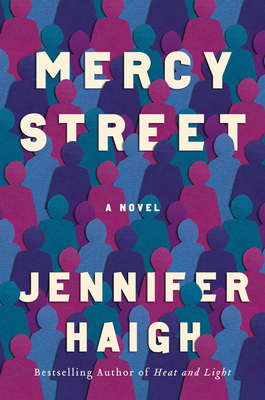
Jennifer Haigh’s Mercy Street (HarperCollins, 2022)

Image credit: Goodreads.com

Following the template of “girls gone wrong”, Jennifer Haigh has written a wonderful depiction of abortion zealots gone wrong, a novel which should encourage readers to continue to rejoice in their ordinary, heterosexually (re)productive, and pro-life lives.

Granted, that may not have been the intention of the author (trying to illustrate the “benefits” of abortion, I guess), but the characters are so hopeless, purposeless, and downright STOOPID that anybody reading the novel would feel much happier knowing that his or her life AIN’T so bad after all.

Moreover, Haigh’s novel comes close to being a fictional support for the pro-life movement, as I argue below, applying the questions of right-to-life literary theory to the work, primarily because the characters’ world is so devoid of purpose that they function as contrasts to the anti-life mentality of the abortion business which is supposed to be the framework for the novel.

For, an abortion clinic is, after all, still a place where women are harmed, where unborn babies are killed, and where fathers are alienated.  The negative connotation of any abortion clinic obtains despite five decades of feminist rhetoric and blabber about women’s “choice”, “empowerment”, “liberation”, and other euphemisms for the brutality expressed in the first sentence of this paragraph.

Let’s examine the novel vis-à-vis the questions of right-to-life literary theory, shall we?

1.  Does the literary work support the perspective that human life is, in the philosophical sense, a good, some “thing” which is priceless?

          Unfortunately, Haigh’s characters cannot apply any higher philosophical value to life beyond their immediate physical or political needs.  For example, middle-aged Timmy, a key character who interacts with the main character, lives solely for his addiction: daily mounds of marijuana.  (Two annual trips to Florida constitute the paternal attention he gives to his teenaged son, now raised by his ex-wife.)  Forty-three year old Claudia, the main character, thinks her job as a counselor/marketer for the abortion clinic is her summum bonum: “For Claudia, dealing with unplanned pregnancies—prevention, remediation—was more than a career.  It was her mission, her life’s work” (257).

          Pro-life activists who protest outside abortion companies/clinics can use Claudia’s stress as evidence that abortion businesses are demeaning and frightful.  For example, she affirms in close proximity quotes that “Work has been stressful lately” and “I mean, it’s always stressful” (36).  The pro-life reader can sympathize with this pro-abortion character’s stress; much later in the novel, Claudia describes how a “real” abortion clinic operates (she is trying to denigrate a crisis pregnancy center): “The place had no metal detector, no cameras, not even a security guard.  At a real clinic, such measures would be automatic.  At a real clinic, the staff would be afraid” (204).

It is no wonder, then, that, when her mother asks her indirectly why she works at an abortion clinic (“I don’t know how you can work there”), Claudia does not reply verbally, but responds nevertheless: “The person who says it—even if she’s your mother—is trying to start a conversation you don’t want to have” (255).

          How horrible and terribly vapid that smelling like burnt weeds and holding a job which involves harming women, killing unborn babies, and alienating fathers—and not wanting to talk about it—are the existential goods that these characters cite to guide them through their years on the planet.

2.  Does the literary work respect the individual as a being with inherent rights, the paramount one being the right to life?

          The Nazi-like disgust that the novel’s pro-abortion characters have for humanity is striking.  Claudia is especially a hot mess in this regard.  Her view of children counters that of the rest of humanity; she “didn’t love children—at least, not in the global, unconditional way women were supposed to” (22).  Her view towards people in general is derived from a purely economic misinterpretation of her mother’s work in a nursing home.  Her mother “raised other people’s kids because it was one of only a few things she could earn money doing.  The world was full of discarded people, sickly old ones and damaged young ones, and she was a paid caretaker” (17-8).

          Used tissues should be “discarded”, but that adjective should never be used for fellow human beings—unless one adopts the Nazi (and pro-abortion) philosophy that there is such a thing as a life not worthy of life.

3.  If the literary work covers the actions of a family, does it do so respecting heterosexual normativity and the integrity of the family?

          LGBTQ and abortion activists (virtually the same political identity group, of course) will not like how Haigh’s characters support heterosexual normativity despite their best efforts to live according to secular principles regarding sex and families.

          Claudia’s need for heterosexual normativity would be pathetic to LGBTQ and (especially) transgender zealots, but sympathetic to the pro-life world, as in a touching scene where the teenaged Claudia works at a car shop: “She sat in the back like a daughter on television.  A cherished daughter being driven somewhere, her mother in the passenger seat, her father at the wheel” (45).  Saccharine, maybe, but the comparison demonstrates how desperately Claudia wanted ordinary family life.

          Claudia’s desire for heterosexual normativity in a traditional family structure continues.  She states that “she didn’t want to know” whether her mother would have aborted her if abortion were legal in Maine (she was conceived in May 1971), yet the narrator says that Naomi, a fellow abortion clinic worker, “was the mother Claudia wished she’d had” (47, 84).

          Even Timmy, the marijuana dealer, thought that marrying the mother of his unborn baby “seemed like the right thing to do” even though they barely knew each other (164).

          By novel’s end, however, heterosexual normativity reigns supreme, a denouement which begs the question: why, therefore, was it necessary to include an abortion business in the plot?  Was it just a means to end the novel “happy” since there is nothing happy about an abortion?  Or was it the author’s/narrator’s genuine effort, in Marxist literary critical fashion, to overthrow the ideology of anti-life feminist matriarchy with heterosexuality which has been a feature of humanity since we oozed out of the slime?

          Whatever the answer is, it is delightful to know that the neurotic, super-pious, living-out-of-his-mother’s-basement, pro-life protestor Anthony now has a job at a deli, and, when he comes across the woman whom he first screwed, the reader perceives that they will most likely go on a date (here’s where the audience goes “Aw…”).

Even Claudia is overcoming the oppression of feminist pro-abortion ideology by choosing life.  Although she is still working at the abortion clinic (think cognitive dissonance), she is obviously pregnant and declaims the following secular version of a pro-life affirmation of motherhood:

Finding herself accidentally pregnant in middle age was the second-greatest surprise of her life.

          The greater surprise was that she could do it.  (328)

On the last page of the novel, Claudia expands her pro-life declamation with the following:

Soon, soon, she would give birth to her mother.  In the dream she had found this ridiculous, but also correct and delightful.

It was the best possible thing.  (338)

4.  Does the literary work comport with the view that unborn, newborn, and mature human life has an inherent right to exist?

          Like contemporary abortion novels written by openly anti-civil rights authors, Haigh’s novel does not recognize the first civil right, the right to life of the unborn child.  The pro-abortion characters express their hatred of the unborn child to be killed in abortion with the usual contempt, sometimes in new anti-life phrases which further distort his or her humanity.

          For example, Claudia defines her miscarried child, a baby lost at eight weeks, whom she did not want, as

a fetus the size of a gumball.

          It wasn’t a baby; it was a menstrual period.  (97)

Note that the negation, the rhetorical use of “not”, followed by definition, is reinforced by being its own paragraph, as though the narrator/author wanted to emphasize the dehumanization of the unborn child.

          Claudia continues her rant about the fetus not being a person later in a series of adjectives, showing how ignorant she is of fetologists’ research into the activities of the unborn human being: “this mute, unthinking knot of tissue—alive, yes, but unformed, unconscious, incapable of tenderness or reasoning or even laughter” (130-1).

          Even a hallmark of women’s reproductive capacity, pregnancy, is denigrated by these anti-life characters.  While life-affirming (pro-life) women regard pregnancy as a joyous possibility of being female, Claudia, in contrast, compares pregnancy to a burning building with a fire on each floor (14).

          Just like other pro-abortion novels, even ones written by activists who support abortion businesses like Planned Parenthood, if recognizing the first civil right to life is impossible for these pro-abortion characters, one would think that saying the word “abortion” would not be, but it is.  Instead of saying the word “abortion”, clinic employees use an acronym to hide the name of the killing they perform: “An AB.  That’s what they called it.  Whenever possible, they avoided saying the word” (26).

          The narrator, seemingly recording Claudia’s reflections on an aborting mother’s experience, uses multiple euphemisms for the killing about to occur:

In an hour the procedure would be over, and Hannah’s visit to the clinic would become part of her past.  When she thought about it at all, she’d remember a youthful mistake, quickly corrected.  In the spring she would graduate from Pilgrims Country Day.  Whatever happened next—Yale or Dartmouth, the future unfolding—would stem directly from the choice made on Mercy Street.  For Hannah R., every door remained open.  Her life was entirely her own.  (178)

While the words “choice”, “it”, and procedure” have a long history in anti-life writing to refer to abortion, this novel offers some unique and verbose euphemisms which the pro-life world should note as linguistic attempts to hide the brutality of abortion.  A “visit to the [abortion] clinic” is not like visiting Grandma for her homemade ricotta cookies.  “Youthful mistake” (that is, killing an unborn child in an abortion) is not like the youthful indiscretion of dancing to a disco song on your car hood while slightly inebriated.  While using white-out to erase a digit error in one’s checking account register may be something which needs to be “corrected”, an abortion corrects nothing because becoming pregnant and safeguarding human life in the womb are not errors.

          Another distortion pro-abortion characters use to hide the always-negative connotation of “abortion” involves layers of ambiguous linguistic camouflage for teenagers who get a judicial bypass abortion.  The author compares it to “permission to do as she wished with her one and only life” (28).  “Permission”?  “As she wished”?  “Her one and only life”?  These phrases require an extensive unpacking which would make this review more lugubrious than it already is.

          Moreover, any educated reader must note how pro-abortion characters lack or ignore the science on which the pro-life movement is based.  This is evident, for example, when Claudia imagines herself in a video countering what a pro-life protester says about abortion and breast cancer: “Just so you know, there is no connection at all between abortion and breast cancer” (98; italics in original).  That the author/narrator felt compelled to emphasize this falsity in italics heightens either the zealotry or the willful ignorance of the pro-abortion main character.

5.  When they are faced with their mortality, do the characters come to a realization that there is a divine presence in the world which justifies a life-affirming perspective?

          Finally, the characters in Haigh’s novel are just like every other abortion novel: if not openly irreligious, then they are simply ignorant.  They’re dumb as dirt when it comes to the smallest particulars of faith, let alone the wider concerns of religion.  For example, Claudia is terribly ignorant of a prayer which is common knowledge.  “Hail Mary, full of grace.  There was more to the prayer, but Claudia had never learned it.  She understood the words only in football terms, the doomed audacity of the long-distance pass” (283; italics in original).  To be fair, even the “pro-life” characters are irreligious.  Victor Prine, the racist whom the narrator/author identifies as a pro-life protestor, thinks that people have faith because they are senseless: “The prison chaplain had caught him at a vulnerable moment.  Later Victor would come to his senses, but at the time it felt real to him.  He had wanted so badly to believe” (197).

          Furthermore, Claudia “had no experience with religious people” (8-9).  This lack of experience with people who have a radically different worldview from hers may account for her (or perhaps the author’s) ignorance throughout the novel.  For example, Victor Prine is a pro-life activist, albeit one who is racist against African Americans, who engages in only one legitimate pro-life activity (distributing pro-life signs along his trucking routes) and one shady if not illegal activity (posting photos of mothers going into abortion clinics on his website).  It’s interesting, therefore, that the author only focuses on pro-life protesters.  She is apparently ignorant of other forms of pro-life activity: enacting protective legislation, composing pro-life songs, assisting mothers with untimely pregnancies by operating free crisis pregnancy centers (one such crisis pregnancy center discussed in the novel is dismissed as an entity which “existed for one reason only: to trick women out of getting abortions.  The place was a fraud” [203]), or even writing pro-life book reviews of pro-abortion novels.

          Makes you wonder if Haigh has any pro-life friends or if she is encased in the anti-life world of virulently pro-abortion New York editors and publishing houses.

          But I digress.

          There is one shining example of a crack in Claudia’s anti-life monolith, however.  Claudia actually speaks kindly of a pro-life protestor named Puffy on one page (174) and then asks two questions about his pro-life witness later in the novel.  Claudia “thought of Puffy, who showed up at the clinic each morning to do absolutely nothing.  How could he stand it?  What, exactly, kept him coming back?” ([229]-30).  Answering these two questions could destroy her pro-abortion mindset.

While Haigh’s work need not be purchased, pro-life readers who would like to examine it in detail can always obtain a copy from their local libraries, thus saving their money for donations to pregnancy support groups.

Categories
Book reviews

Katixa Agirre’s Mothers Don’t (translated by Katie Whittemore, Open Letter, 2022; first published in 2018)

Image credit: Goodreads.com

Agirre’s work may be cancelled or banned for not repeating the usual feminist claptrap about “post-birth abortion”, “fourth trimester abortion”, or some other euphemism for killing newborn babies, so read it now.

This novel, therefore, can be illuminating for the pro-life reader, someone who may not be familiar with the push to legalize infanticide as a logical extension of the pro-abortion movement.  After all, if an unborn baby is merely property of the mother and is unwanted, then why should that child be allowed to live after his or her birth?

Fortunately, instead of being a preachy work that attempts to pass itself off as fiction (like, for example, Heather Marshall’s Looking for Jane [Atria Books, 2022], which I recently reviewed, which is more a propaganda piece than a work of fiction), Agirre’s 161 pages constitute a well-constructed work of fiction, examining the case of a mother who drowned her twins in a bathtub.

The novel is much more than that, however.  Agirre’s narrator is herself a mother who had just delivered her newborn son, so she can identify with the infanticidal mother’s postpartum depression, boredom with the ennui of motherhood, and possible psychosis.  The narrator is able to understand, perhaps resolve, the conflicts in her own life as she is trying to understand how any mother could kill her own children, and the conflicts the narrator experiences are profound, as every new mother knows.  She describes the effect of her new status as a mother on her being thus: “my identity as a mother had devoured all other identities and banished all my other selves into exile” (22).

Despite these conflicts, the narrator utters several profound life-affirming statements against infanticide, which pro-life feminists will appreciate.  For example, the narrator reflects on how the word “infanticide” is euphemistically replaced by “the acts” during the infanticidal mother’s trial (37).  She talks about how “it’s easy to kill a child.  They’re small, weak” (89).  All of chapter 1, titled “Killing Children”, in Part II gives a brief, often ironic history of infanticide (89-97), ironic as in the following sample: “If abortion demands action (be it turpentine or a rusty, unsterilized hanger to the uterus), infanticide only requires omission.  Don’t keep it warm, don’t feed it or care for it, abandon it in a forest, lock it in a closet, forget you put it there.  Done” (89; italics in original).

Moreover, since she is a writer who has been awarded for her work, the narrator delves into the infanticide case as an interesting venue for her to write her own emotions and experiences with love, becoming pregnant, being tired and (often) bored with motherly activities, and other matters.  The work, then, represents reality and is neither a saccharine view of motherhood as pure joy nor the drudgery warranting killing the unborn child in abortion or the born child in infanticide.

The narrative maintains dramatic tension throughout the easy-to-read chapters, and the concluding paragraph, which contains the narrator’s respect for the killed twins, reads remarkably like a credo of a pro-life feminist writer:

Everything I did, I did for me.  Following an impulse down to the last comma.  But I want to think that, to a certain extent, I also did it for them.  An acknowledgement or offering, a taste of all they were denied, a little tenderness—at least in memory—for those twins who were probably perfect too.  I am life, after all.  And at the end of the day, I try to beat back death.  (161)

That the narrator concludes the work by expressing this pro-life philosophy is particularly noteworthy since she never manifests a religious faith on which her life-affirming principles could be grounded.  The reader should conclude that, if a secular person can arrive at such life-affirming statements, then supporting the right to life of newborn babies should be much easier for religious persons.

Recommended for students of infanticide literature and activists who see the killing of the newborn as a growing threat from pro-abortion feminist zealots.

Categories
Book reviews

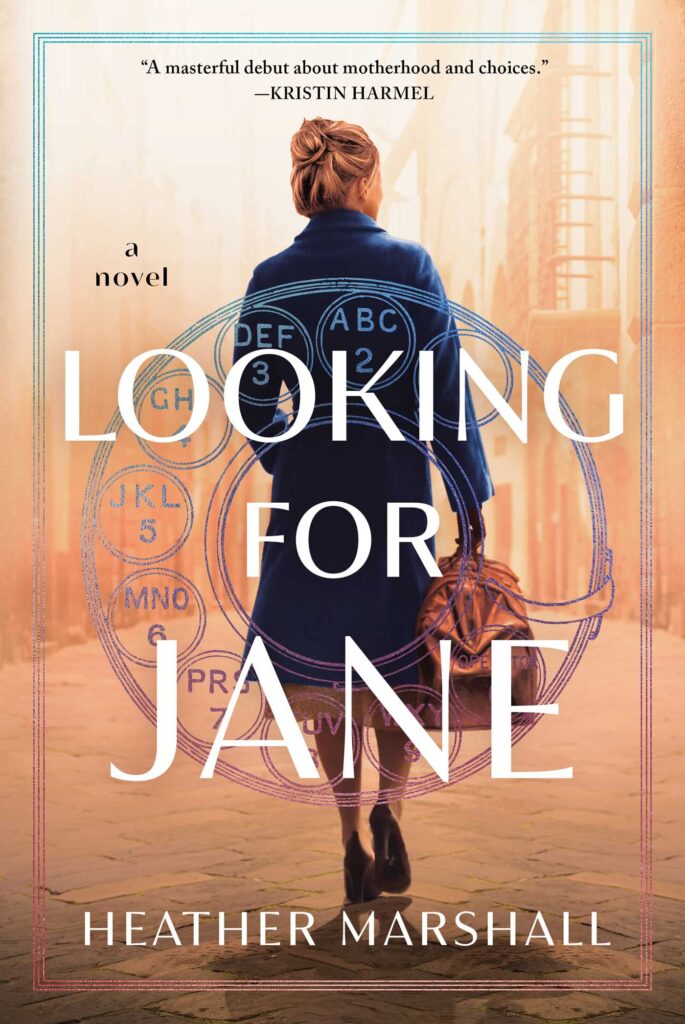
Heather Marshall’s Looking for Jane (Atria Books, 2022)

Image credit: Goodreads.com

What would have been a great story about a child conceived from rape being reunited with her birth mother is reduced to pro-abortion propaganda with a needless lesbian twist.

Despite this catastrophic flaw, while it is a propaganda piece more than a work of fiction, Marshall’s work can be used by the worldwide pro-life movement to support pro-life feminists in their fight against abortion and other life-destroying activities.

For example, Marshall’s propaganda effort claims that pregnancy resulting from “circumstances like rape or incest” are “often horrific”, yet the author is blissfully (or ironically) unaware that one of her two main characters, Nancy, is a grown woman who was once an unborn child conceived from the rape of her mother.  Nancy escaped being killed for the crime of her father because abortion was illegal in Canada when she was born and because Nancy’s grandparents brought her mother to a home for unwed mothers negatively described as “just one big well-oiled machine” (84).

Another major irony in Marshall’s depiction of life-denying abortion propaganda is that Evelyn Taylor, an abortionist in the network of clandestine abortionists called the Janes, aborted her own grandchild.  The mother who comes to her for the purpose of killing the unborn child is, unbeknownst to her, her own daughter Nancy.  Evelyn will eventually realize—ten pages from the end of this verbose work—that she performed an abortion on her daughter, but never acknowledges the fact that she killed her own grandchild.

The 372 pages which constitute this apologia for abortion wrongs has several problems, four of which are significant.  First, having two main characters as married lesbians who undergo artificial insemination is worthless as character attributes.  In fact, having Angela and Tina in a committed relationship, albeit a distorted lesbian one, seeking to have children, although in a disordered manner, undercuts the author’s obvious leftist and woke philosophy.  (Marshall twice uses the phrases “pregnant person” once and “women and pregnant people” twice in her “Author’s Note”, a clear sign that she adopts the woke distortion of science which asserts that biological males can become pregnant; see pages 379-81.)  If anything, these lesbian characters support heterosexual normativity since their “marriage” leads to the happy event of children, which is the desired result of the sexual pleasure enjoyed by every heterosexual marriage.

A second serious problem of this abortion diatribe is that many characters are flat and function as allegories more than representations of real human beings.  The nun who ran the home for unwed mothers where the future abortionist Evelyn gave her child up for adoption is depicted as pure evil, derisively called “The Watchdog” throughout.  No human character can ever be pure evil as Satan, not even the American criminals Hillary Clinton or Joe Biden or (to honor Marshall’s setting) the Canadian abortion zealot Justin Trudeau.  Similarly, Canada’s abortion activist Henry Morgentaler is treated like a hero or a saint instead of the killer that he was (cf. 129-30).

A possible exception to this objection, however, is that Nancy may have round character traits when she realizes that post-abortion syndrome (PAS) contributed to a significant failure in her life: the secret of her adoption, her clandestine work for the Janes, and hiding her abortion from her husband are reasons for her eventual divorce.  Pro-life sociologists have documented the effects of PAS on women for decades, and it’s good that Marshall depicts a woman suffering from that psychological disorder because of her pro-abortion activity.

A third problem of this sometimes tedious attempt to enshrine abortion concepts in the reader’s mind is that anti-life slogans interfere with the story, which is essentially the effort of a birth mother to find her daughter.  For example, characters offer the usual claptrap that abortion is “just like any other surgery or treatment” (118) or ask the flaccid rhetorical question “Yet aren’t fertility clinics and abortion clinics just two sides of the same coin?” (119).

Worse, the characters perpetuate the philosophical error of thinking that mothers have no choice when faced with an untimely pregnancy besides abortion.  For example, Nancy thinks that abortion is necessary: “But you have to do this, she tells herself” (183; italics in original).  She thinks that having an abortion is “the keystone of her future” and that “abortion is the first step to setting herself back on track” (183).

This mantra of “choice” interrupts the narrative often.  Regarding her working with the Janes, Nancy “revels in the knowledge that she’s helping other women gain power over their own lives” (232-3) and that abortionists are “all about choice” (286).  Even the tired and dated slogan used by abortion businesses (like Planned Parenthood) is trotted out to prop up the choice element: “Every child a wanted child, every mother a willing mother” (305; italics in original).

What a terribly sad narrative of terribly sad women who think that harming themselves in abortion, killing the unborn babies whom they are carrying, and alienating the fathers of the unborn children are the only “choices” they have.

A final problem of Marshall’s narrative is that it completely ignores efforts by pro-life pregnancy support groups to meet the need that Canadian women had for assistance with their untimely pregnancies.  Marshall’s chronologically-shifting work is set in Toronto from the 1970s onward, so it is either pure ignorance or abortion propaganda on the author’s part to omit the moral and material support that the pro-life organization Birthright, founded in the metropolitan Toronto area in 1968, began offering to women facing untimely pregnancies.

But then, pro-abortion writers must often disregard pro-life history since pro-life groups like Birthright assist the mother and the unborn child.  All an abortionist can do is kill one and harm the other.

Despite these serious flaws, pro-life activists can use Marshall’s myopic view of Canadian abortion history to advance life-affirming principles.

For example, although the reader must consider the source (an author who has completely bought into the pro-abortion and woke nonsense), Marshall apparently does not realize that she uses the same reasoning to support abortion that slaveholders used to justify the subjugation of African human beings: property rights.  An interesting passage from the “Author’s Note” makes this clear: “it [the unborn child] still resided inside my body.  /  My.  Body” ([373]-4; italics in original).  Thus, the support for abortion among woke activists and anti-life feminists is extremely tenuous if they must rely on a legal concept (slavery) which is abhorrent to the world.

Moreover, the five questions of right-to-life literary theory can be applied to show the vapidity of Marshall’s work.  For example, regarding the first question of right-to-life literary theory (whether the literary work supports the perspective that human life is, in the philosophical sense, a good, some “thing” which is priceless is clear): it doesn’t.  The only philosophical value that Marshall endorses repeatedly, ad nauseam, is the ambiguous “choice”—not the choice of free will or the ability to choose spumoni over chocolate ice cream, but an outdated legal opinion of a now defunct Roe v. Wade decision that allowed some mothers to kill unborn babies because those unique human beings were considered mere property of their mothers, like a purse or a car.

The second question of right-to-life literary theory (whether the literary work respects the individual as a being with inherent rights, the paramount one being the right to life) is just as easily answered: nyet again!  It is only the life of the woman who is superior to the life of the man or the life of the unborn child who is gendered either male or female.  That pro-abortion persons cannot perceive this distortion of equality between the sexes is remarkable, given all their assertions of equality throughout the last half century.  Thus, pro-life readers can point to Marshall’s polemic as evidence that it isn’t equality that pro-abortion feminists want for women, but dominance over men.

The third question of right-to-life literary theory (whether the literary work respects heterosexual normativity and the integrity of the family) can be answered affirmatively, if only because of contrast.  The desire of the lesbian “married” couple to have a successful artificial insemination of an unborn child reinforces the heterosexual normativity which their abuse of the marriage covenant implies.  If the lesbians were genuinely opposed to heterosexual normativity, then they would not seek marriage (a heterosexual practice) and would not seek to have a child (the result of a heterosexual union).

The fourth question of right-to-life literary theory (whether the literary work comports with the view that unborn, newborn, and mature human life has an inherent right to exist) is obvious: the characters conclude that abortion is not merely a choice, but a right that women have to kill.

Finally, regarding the fifth question of right-to-life literary theory (when they are faced with their mortality, do the characters come to a realization that there is a divine presence in the world which justifies a life-affirming perspective), the reader becomes painfully aware that these pro-abortion characters live carpe diem lives.  Evelyn is explicit in her rejection of religious concepts; she “hasn’t believed in any kind of god for decades now, and she doesn’t subscribe to the concept of fate.  Life is simply too cruel for those things to exist” (368).  The other pro-abortion characters, however, are blissfully unaware of any other force in the universe besides their own impersonal adherence to the nebulous idea of “choice”; the ancient universals of beauty, goodness, and truth are absent as philosophical notions which could guide their irreligious, secular lives.

While Marshall’s work need not be purchased (after all, why would anybody spend his or her pro-life dollars on a literary work whose author funds leftist and woke groups?), pro-life readers who would like to examine it in detail can always obtain a copy from their local libraries, thus saving their money for donations to pregnancy support groups.

But then, I read it so that you don’t have to.

Categories
Book reviews

George Gmitro’s Equality@Big Cypress (Viable Press, 2023)

Whether fighting slavery or its modern equivalent (abortion), Gmitro’s novel set in antebellum America illustrates the courage needed to effect social change.

The second in a series of three novels concerned with the prosecution of a young man who saved the life of his unborn child in an unorthodox way, Equality@Big Cypress provides a substantial backstory to account for why the protagonist of the first volume would have engaged in such a daring effort to save the life of that unborn child and the mother from abortion.

The controlling theme connecting both volumes is, unquestionably, courage: courage that Lance Strickland took in saving his unborn child in volume one, and courage that his predecessor, Wyatt Striklynn, took in helping three beloved slaves escape from members of his own family who were slaveowners in the antebellum American South in volume two.

The topic of the first volume in the series (Viable@140) concerned abortion and the mother’s now debunked “right” to kill the unborn child whom she might carry.  This second volume in the Write for Life series pursues other topics.  Pro-life activists have long compared abortion with slavery, as Dr. Jack Willke explained in his 1984 nonfiction work Slavery and Abortion: History Repeats.  In that nonfiction work, Willke argued that abortion is similar to slavery, which dehumanized the born person of African descent as much as abortion dehumanizes the unborn person of any race.

Gmitro’s novel can be considered a literary exploration of Willke’s claim from forty years ago.  While it was a central topic in the first volume in the series, abortion does not appear at all in this subsequent volume, yet the parallels between the unborn child deprived of his or her right to life and African slaves deprived of their right to live is inescapable.

Contemporary students may especially find it challenging to examine how it could have been possible that born human beings of one race could ever have thought that slaves—who, unlike unborn children hidden in the womb, were visible people—were considered less than human and therefore could be legally considered property.  Since the status of the slaves parallels the dehumanization of today’s abortion movement, Gmitro’s novel will disturb the radical minority of readers who support abortion, but regale others who celebrate that the faulty and now-defunct Roe v. Wade legal decision (which disordered the family relationships of father, mother, and unborn child) has been thrown into the dustbin of history.

A third-person omniscient narrative throughout, the structure of the narrative is as fast moving as a Mary Higgins Clark mystery.  Comprised of 133 chapters and a prologue and epilogue, each chapter of the 486-page novel averages less than four pages.  Most chapters end with a tease, a hook that persuades the reader to continue reading.  Each chapter shifts the action from various geographic locations (the west coast of Africa; South Carolina; Washington, DC; and others), but the shift in setting does not disturb the reader’s understanding of the plot.

In fact, the constant shifts in action in the various regions help the reader understand that the obtaining of African slaves (sold to European traders by African tribes) contributes to the description of what happens to those slaves when they reach South Carolina, for example, which then leads into what the Buchanan presidency must consider when one of the Democratic Party’s senators is caught in illegal transatlantic slave trading.

The action-packed writing style easily justifies the claim that the novel can be leisurely read in one or two days.  There are, however, significant drawbacks in the composition of the volume, mostly numerous punctuation and grammar errors, which, while not impeding the comprehension of the narrative, not only makes the reading choppy (since the reader must correct the errors him- or herself), but also casts doubt on the quality of the editorial staff reviewing the manuscript or (worse) the author himself.  It is hoped that future editions will correct these many errors to improve the quality of the volume.

Despite these drawbacks, I recommend Gmitro’s novel for high school and college students (especially those involved in social movements comparing the history of slavery and abortion) and contemporary social justice activists (especially those who fight against the woke distortion of Judeo-Christian social justice, such as the racist group Black Lives Matter and the violently pro-abortion Democratic Party).

Since Amazon collaborates with cancel culture zealots and bans conservative and pro-life books, buy this book directly from the publisher:

Categories
Book reviews

Joshua Hren’s How to Read (and Write) Like a Catholic (TAN Books, 2021)

Written in a high register of literary technical vocabulary which PhD students taught by leftist professors in English would understand more than the average man or woman, Hren’s collection of essays is still worthwhile as substantial reading to understand the idiocy of much contemporary fiction.

Although the 463 pages contain few mentions of fictional literature concerned with the pro-life issues (my central research concern), Hren’s essays can help readers who are forced to suffer through LGBTQ and transgender accounts of quasi-fictional gender dysphoric literary diarrhea.  Moreover, readers will appreciate that the bizarre, sinful, and often laughable elements of those two categories of fiction (among others in the leftist realm of American publishing) are topics which Catholic readers must analyze, evaluate, and even teach.

Hren relies heavily on major Catholic saints and literary figures to justify why not only Catholics, but even secular persons should read novels exploring ideas contrary to ingrained natural law beliefs, including Dana Gioia, Jacques Maritain, St. John Henry Newman, and Flannery O’Connor.

For example, Hren quotes St. John Henry Newman often: “literature is largely a record ‘of man in rebellion’” (2; internal quotes in original), and another quote soon after expands on this idea: “You cannot have a sinless literature of sinful man” (4-5).  With such assertions, it is easy for Hren to conclude that “Catholic thinkers should and even must analyze and teach, appreciate and criticize the sinful literature of man.  Why?  Because most men are not destined for the cloister” (5).  The most significant words from Newman for Catholic writers which Hren quotes may be the following: “Take things as they are, not as you could wish them” (29).

O’Connor’s words about writing fiction can assuage the horror that many moral and righteous readers may feel when they delve into novels deemed important new works by young authors, but which to them seem not merely naughty, but often outright pornographic.  Hren cites O’Connor’s “pious trash” (33) comment, and one can understand how many “religious” novels are often boring, making their hero characters flaccid caricatures or allegories instead of fictional characters meant to represent living human beings.  This is especially true if the “good” characters end the novel with a “come to Jesus” moment, Evangelical Christian fiction being particularly disposed to resolve plot conflicts with such a righteous yet saccharine denouement.

On these bases, for example, the good priest’s famous (for me), infamous (for some) masturbation scene in Brian Moore’s novel Black Robe as he witnesses coitus by two youths is justified.  Whether a reader delights in the prurience of the scene or not is something which he or she should consult with his or her priest in the confessional.  For me, Moore’s novel goes beyond pornography to bring my attention to God’s deeper truths about not only sexual sins, but also sexual delights which should obtain between a married man and woman (since they are unmarried, the young people are committing the sin of fornication).  While it’s odd that Hren doesn’t cite Moore’s novel as a solid example of Catholic fiction which depicts challenging matters, perhaps a future edition will include this novel and others.

Hren does, however, examine works by many twentieth- and twenty-first century authors, Catholic all (whether devout, lukewarm, or fallen-away), and his criticism of the various works can overwhelm readers with a literary load that seems insurmountable.  Reading Evelyn Waugh’s Love Among the Ruins: A Romance of the Near Future (which concerns euthanasia); Katherine Anne Porter, a “sometimes-Catholic writer” (133); David Foster Wallace, who “took his own life in 2008” (139); James Joyce, whose work includes short stories about altar boys most likely molested by priests—a topic considered long before the current pedophile and pederast scandals; Walter M. Miller, another suicide, whose major work, A Canticle for Leibowitz, examines euthanasia; Christopher Beha’s What Happened to Sophie Wilder, which also contains a euthanasia element; and Michael Chabon’s short story about abortion may seem suitable only for those lucky English professors who achieved early retirement ten years ago and have time to sit back, crack open a book from interlibrary loan that no one reads, and annotate at his or her leisure.  (Ahem!).  Hren, however, thinks we all should read these works to show the great expanse of Catholic fiction.

And why we should read such works is answered well.  Hren argues that “Good fiction helps us better grasp the fact that everything we deliberately do—from amusements to our acts of mercy—assumes moral significance” (2).  Thus, “we ought not dismiss or underappreciate the importance of well-rendered sin in good literature” (4)—the phrase “well-rendered” not being ironic.

Hren further claims that the purpose of Catholic fiction differs greatly from a purely secular understanding of the art.  If “the Catholic literary tradition has been marked by writers who understood that human nature finds its final cause not in mere beauty, not in mere inclusion, but in salvation” (48), then, he states, “a Catholic literary culture that works in continuity with its rich heritage will give us a contemporary literature that both gazes unflinchingly at the messiness of our present moment and artfully works out its characters’ salvation or damnation” (48).  This conclusion is necessary because “Christian love is never aimed at the neighbor in-and-of-herself, but at the Imago Dei that is found in every human being” (199).

To bolster his conclusion, Hren quotes Dana Gioia at length about a “Catholic aesthetic”:

Catholic writers tend to see humanity struggling in a fallen world.  They combine a longing for grace and redemption with a deep sense of human imperfection and sin.  Evil exists, but the physical world is not evil.  Nature is sacramental, shimmering with signs of sacred things.  Indeed, all reality is mysteriously charged with the invisible presence of God.  Catholics perceive suffering as redemptive, at least when borne in emulation of Christ’s passion and death.  (342)

Unfortunately, the volume does not have an index, so the reader must guess that the various chapters may contain what he or she is seeking.  Sometimes, the content of a chapter is obvious; sometimes, chapter contents are ambiguous from the title.  The volume does contain two reading lists which can help the reader, whether faculty member or student, check off those items which Hren suggests as required reading to appreciate the depth of contemporary Catholic fiction.

Finally, since Amazon collaborates with cancel culture zealots and bans conservative and pro-life material, purchase this book from TAN Publishers directly: https://tanbooks.com/products/books/liberal-arts/literature/how-to-read-and-write-like-a-catholic/.  Instead of paying $34.95, purchasing it from TAN through its $5 a book program makes this scholarly tome a deal.

Categories
Papers Presentations

Transgender Fiction and the Right-to-Life Issues: A Study of Recent Transgender Fiction on Abortion and Euthanasia Using Right-to-Life Literary Theory

Abstract:  After reviewing some contemporary scholarship which attempts to connect transgenderism and the right-to-life issues, this study applies the five questions of right-to-life literary theory to recent fictional work concerned with transgenderism and abortion and euthanasia.

           When Ryan T. Anderson wrote his When Harry Became Sally: Responding to the Transgender Moment in 2018, transgender activism may indeed have been perceived as a moment, a blip, in the otherwise distorted perspectives of LGBTQ and transgender activists against heterosexual normativity.  These distortions have since been forced by the academy on students, by the leftist media on the entire nation, and by the Democratic Party on its candidates running for office.

Certainly, claims by transgender activists that the transgender population of the United States merits more government and social acceptance and support can be questioned by statistics from valid gay and lesbian sources regarding whether there is an urgent need to do so.  In terms of raw political power, the numbers of persons affected by gender dysphoria suggest that transgender activism does not merit increased government promotion.  The Nation, for example, reports that, while 11,000,000 persons in the United States purport to be LGBTQ, the “Portion of US adults who are transgender or nonbinary” is estimated to be 1.6%, or 5.3 million (“By the Numbers”).[2]  Now, as the end of 2022 approaches, the past four years of transgender political activity seem only a prelude to an entrenched philosophy which must never be questioned in academia, the media, or in government.

          Moreover, the oppression of those who uphold traditional sexual values regarding gender dysphoria is abetted by academics who should support them in the interests of freedom of thought and speech but do not because academia has fallen victim to the aggressive transgender ideology, a belief system characterized by two inherent logical fallacies in gender identity discourse that most scholars fail to recognize.[3]

First is a phrase used often in transgender political discourse which functions as a rallying cry for extremist transgender activists.  While Anderson correctly points out that gender is not “assigned” but “recognized” at birth (77) and, as fetologists know, perceived well before birth, many scholars persist in using the erroneous language of sex assigned at birth, probably because doing so comports with the political view that gender is a social construct instead of a natural factor of human identity.  For example, Heidi Moseson and her fellow researchers preface their definitions of the various categories of sexual identities with frequent use of the “assigned” phraseology:

[slide 2]  Gender identity can be consistent with or different from the sex that someone was assigned at birth.  Sex assigned at birth is typically based on external genitalia, and is recorded as female, intersex, or male.  “Transgender” is an umbrella term for people whose gender identity differs from the sex assigned to them at birth, while “cisgender” is a term for people whose gender identity aligns with their sex assigned at birth.  (2)

Second is a recent phenomenon (within the last year or so), the biologically fallacious yet politically correct idea, according to leftist theorists, that pregnancy can occur in men as well as women.  One thinks of how the phrase “pregnant people” instead of “pregnant woman” or “mother” has been excoriated in social media by those who affirm that only women can become pregnant, often ridiculing leftist theorists for sacrificing biological facts of gender identity among humans for the cause of advancing an LGBTQ or transgender agenda.  The illogicality of this newest trend has not disturbed some researchers, however, such as Sydney Calkin and Cordelia Freeman, who answer a question about the connection between gender identity and abortion in their field of feminist geography thus:

[slide 3]  How are social and cultural geographers leading work to understand the diversity of bodies in relation to reproductivity to better account for the diversity of gender experiences among pregnant people?  Research on abortion often uneasily navigates the tensions of gender diversity and fluidity.  Restrictions on abortion access are widely understood as gender-based discrimination against women, but not all pregnant people self-identify as women.  Moreover, trans and non-binary pregnant people often face the greatest vulnerability in accessing reproductive care.  Geographers should do more to account for the intersection of gender with other axes of inequality including sexuality, class, ability, and race in abortion access.  (1329-30)

It would seem as though any claim for “rights” of persons experiencing gender dysphoria have only the vaguest connection with any of the three right-to-life issues (abortion, infanticide, and euthanasia), the sexual factor of abortion being the only possible nexus where a transgender person could argue that his or her “rights” are somehow being ignored, frustrated, or trampled.  Beyond this vague possibility, however, what does any argument for transgender sexual rights have to do with three practices which kill human beings?

          The scholarship surrounding transgenderism has not yet questioned the union of any claim to transgender “rights” and an anti-life mentality.  Instead, scholars have decidedly placed themselves fully in support of abortion and other anti-life practices often without delving deeper into the rationale behind the conjoining of the two radically different political issues.  For example, Barbara Sutton and Elizabeth Borland argue that

Abortion has also figured prominently in feminist politics, activism and theorizing.  Yet as gender binaries are deconstructed in dialogue with queer theory and movements, the meaning of “woman” and “man” cannot be taken for granted, and contemporary abortion politics reflects these contestations.  There have been increasing calls in activist spaces to “queer” abortion rights advocacy, to incorporate non-normative understandings of gender identity and sexuality into abortion struggles and services.  ([1378])

Furthermore, the naiveté by which these scholars have accepted abortion as being a transgender concern can be reduced to the notion that supporting sexual “freedom” means supporting abortion.  One can concede how this political position could have been obtained by leftist activists, for it does seem ineluctable to argue that, if a woman not only wishes but also has a right to engage in unrestrained sexual activity, she then must have the right to kill the unborn child who was not desired yet created by that sexual activity.  If there is a “right” to sexual activity, then the domain of that purported right extends only to sexual activity and not to the domain of another person’s body, the person in question being an unborn human being.  Moreover, as transgender activists assert, a human body is not necessarily recognized as one of only two genders, but whatever gender a person believes he or she is, disregarding the evidence of his or her genitalia and chromosomal endowment from his or her parents.  The scholars who ally themselves with transgender activists, therefore, have unfortunately failed to see the logical fallacy of such a conclusion.[4]

          Of course, pro-life academics are able to contend with the assault on heterosexual normativity by LGBTQ and transgender activists by emphasizing the scientific data in their respective fields.  Psychologists can assist persons with same-sex attraction to negotiate their unnatural affections, sociologists can direct persons with same-sex attraction to appropriate social services providing support, and medical staff can aid LGBTQ and transgender persons in understanding their bodies as male or female entities with discrete advantages for the promotion of human life.

Given that most faculty and scholars in the humanities, however, have acquiesced to the premises of LGBTQ and transgender political activism (probably because of a misunderstood or distorted sense of what diversity, inclusion, and equity mean), how can any faculty member or scholar in the humanities, particularly in literature, contribute to the severe gap in scholarship which affirms heterosexual normativity and refutes the claim that transgenderism must align itself with practices which lead to the death of human beings, specifically, the unborn by means of abortion, the handicapped newborn through infanticide, and the elderly or medically vulnerable by euthanasia?  The balance of this paper will venture to answer that question.

          For several years now, I have applied five questions of what I name right-to-life literary theory to various works written on the life issues, a method of literary criticism which, unlike the various theories used in the academy, can assist students of literature to understand a work’s perspective on human life more comprehensively than any of the current literary theories which are restrictive, such as feminist literary criticism, which emphasizes the tired concepts of patriarchy and oppression of women; deconstruction, which strives to prove the instability of language; or Marxist literary theory, which emphasizes the importance of economic power on human life.

          [slide 4]  The following are the five questions which constitute right-to-life literary theory.  First, does the literary work support the perspective that human life is, in the philosophical sense, a good, some “thing” which is priceless?  Second, does the literary work respect the individual as a being with inherent rights, the paramount one being the right to life?  Third, if the literary work covers the actions of a family, does it do so respecting heterosexual normativity and the integrity of the family?  Fourth, does the literary work comport with the view that unborn, newborn, and mature human life has an inherent right to exist?  Finally, when they are faced with their mortality, do the characters come to a realization that there is a divine presence in the world which justifies a life-affirming perspective?  These five questions will be applied to two representative transgender novels: Vickie Weaver’s Billie Girl (2010) and M-E Girard’s Girl Mans Up (2016).[5]

          [slide 5]  The plots of the novels can be briefly summarized before the questions of right-to-life literary theory are applied.  Weaver’s novel is mostly a first-person account by Billie Girl, who was abandoned by her birth parents and raised by various people, including two transvestites who called themselves her mothers; she eventually learned that “Big Mom was a boy” and that “Mama Edith was a boy, too” (42).  She ends her days in a nursing home where she euthanizes fellow residents.  Girard’s novel concerns Pen (Penelope), an eleventh grader who thinks that she must engage in same-sex activity because she is attracted to females and who thinks she is transgender because she likes to wear men’s clothing and style her hair as males do.  In the course of her ventures, Pen assists another high school student in obtaining an abortion and engages in both hetero- and homosexual episodes with her high school friends.

          These synopses may suggest that the novels may not be worth examining.  While Weaver’s is the better novel in terms of deeper issues to explore, both novels suffer from a discursive, if not insipid, style.[6]  Moreover, an adult reader (both novels are written for the young adult audience) may not appreciate the emotional trauma that the main characters experience and may thus consider the narratives verbose and immature.  However, both novels provide a rich insight into the minds of transgender characters and, certainly, into the views of Girard, a transgender author.  Moreover, when the five questions of right-to-life literary theory are applied, readers will discover the life-affirming ideas of both novels even though they seem to support abortion (as in Girard’s work) or euthanasia (as in Weaver’s novel).

A.  The Pricelessness of Human Life

          [slide 6]  To answer this first question of right-to-life literary theory, both novels do not convey a sense that human life is either precious or priceless, a standard principle typical of much modern fiction.  Perhaps this can be attributed to the lack of religious sensibility that the major characters in the novels display.  Perhaps the characters’ lack of piety, a necessary foundation to appreciate the value of human life, is displayed to meet what the publishing world thinks is the dominant secularist view of the young adult demographic, if not of the entire American reading public.  Both novels indicate that life is more a drudgery than an opportunity either to fulfill one’s life according to set values (a purely secularist view) or to collaborate with the Supreme Being to accomplish good works in this life as a preparation for eternal life (the Judeo-Christian view).

          The evidence that human life is more drudge than delight permeates the novels.  Pen’s motivation in life, which matches that of her friends, is that she is “a boyish, video-game-playing girl” (Girard 2).  Billie Girl seems merely to advance from one episode to another, without any direction or goal beyond satisfying her immediate needs; the men in her life are as migratory as the jobs they pursue.

B.  Respect for the Individual’s Right to Life

          On this second question of right-to-life literary theory, the selfishness which permeates contemporary fiction for young adults is evident in both novels.  Thus, while characters would be hard pressed to assert the right to life of other people, the young adults in these novels seem much more concerned about their own lives.  Adolescence is supposedly the time when young people define and refine themselves, their places in society, and even their relationships with other people and God; Girard’s characters perform none of these adolescent tasks.

Similarly, Billie Girl’s beginnings as an abandoned child should give her reasons to explore her purpose in life; she, like Girard’s characters, also does not operate in her fictional space to consider these questions of life and her place in the world.  Her philosophy is encapsulated in the commonplace that “We do what we have to do” (Weaver 132), an expression which is unclear regarding moral purpose, suggests dominance of one human being over another, and carries a fatalistic tone (“having to do” something cannot be as joyous as “wanting to do” something).  That the characters in these novels are self-centered to an extreme precludes any other interpretation than that they care more for themselves than others.  (The moral implications of such self-centeredness will become evident in response to other questions.)

C.  Heterosexual Normativity and Integrity of the Family

          One would presume that the global answer to this third question of right-to-life literary theory would be negative since both novels depict transgender characters who are not only comfortable with their gender dysphoria but also aggressive or militant in supporting the transgender distortion of heterosexual normativity.  There is sufficient evidence for this generality and for the characters’ distorted views of sexuality.

          Unlike religious-based persons who recognize that sexual relations are the province of a husband and wife to accomplish the goals of sacramental marriage (being able to engage in sexual activity to satisfy the human need for pleasure and to be open to the possibility of children), the characters in both novels have a warped sense of sexuality as merely a pleasurable activity, almost on a par with video games to satisfy their entertainment needs.  For example, Colby, one of Pen’s friends, uses her to obtain other girls as his sexual targets so that the girls won’t think he is “a jerk just trying to get laid” (Girard 8).  Tellingly, it is this same character who later says that “Getting in their pants isn’t worth it” and “I just wanna have fun and get laid” (Girard 29, 30).  Another of Pen’s friends, Garrett, has a distorted sense of male sexuality.  His philosophy, uttered in the commonplace expression (noted above) which evokes more humor than rational thought, is that using condoms is what men do: “A man’s gotta do what he’s gotta do” (Girard 130).[7]

          Similarly, Billie Girl’s first exposure to sexuality is a distortion of the sexual act; she learns about male sexuality from a boy whom she masturbated and was masturbated by a man later in life ostensibly as a cure for heavy menstrual cramps.  Although not explicitly stated in the novel, these sexual experiences may have affected Billie Girl’s attitude toward her reproductive powers: “I had never wanted to be a mother”, she claimed (Weaver 132).

D.  The Inherent Right to Exist of the Unborn, Newborn, and Mature Adults

          Both novels fail in answering this fourth criterion of right-to-life literary theory, and the failures are expressed in a surprising and ironic manner.  For example, one would expect that Pen, who is steeped in the transgender ideology, would think that assisting a fellow student in obtaining an abortion is consistent with her philosophical beliefs about gay and lesbian activism, which anti-life feminism distorted to include the killing of an unborn child.  One does not expect, therefore, that the abortion episode in the novel would be so cavalierly handled.  Perhaps the author did not want to make her novel preachy.  More likely, the brevity of the abortion incident suggests that, in a transgender character’s (and author’s) mind, abortion is not as important a matter as asserting one’s “right” to unlimited and unrestricted sexual activity with persons of the same sex.  After all, the six pages which mention Olivia’s abortion (191, 241, 262-3, 286, and 353) constitute 1.6% of the entire novel of 373 pages.  Granted, this is only one calculation in one novel, but this example counters the ideology asserted in scholarly literature that abortion is somehow vitally important to the rights of transgender people.

          More disturbing is the idea that animal life may be more valuable than human life as when Pen declares that she is emotionally bothered by blowing up video game dogs: “It kind of bugs me that I have to blow up dogs” (Girard 32).  Similarly, Pen later expresses in strong language her sadness about killing snails in her back yard: “I kind of feel like crap for destroying their home and murdering them” (Girard 51).  Since this idea is not contained in a solitary incident, one must conclude that the author deliberately conveyed these bits of information to convey the anti-human mentality of such a character.  Remember that it is Pen who assists her friend Olivia in obtaining an abortion, so an unborn child’s life obviously is not as valuable as a real snail’s life or even a video game dog’s.

          [slide 7]   Both novels express well the confusion over language at the center of the abortion and transgender issues.  For example, Pen’s confusion over words like “dude” and “girl” is central to the transgender debate: “It’s like one second, I should be a better dude.  I should stop being such a girly douche, and I should just man up.  Then, it’s the opposite: I’m too much of a guy, and it’s not right.  I should be a girl, because that’s what I’m supposed to be” (Girard 42).  Furthermore, Pen’s inability to understand English words which have stood the test of hundreds of years is evident in the following passage wherein she examines LGBTQ vocabulary:

I don’t think of myself as being gay, because that word sounds like it belongs to some guy.  Lesbian makes me think of some forty-year-old woman.  And queer feels like it can mean anything, but like—am I queer because I like girls, or because I look the way I do?  Maybe I don’t know enough words.  (Girard 65; italics in original)

Perhaps this is why Pen is confused in identifying her relationship with Blake, her lesbian lover; she wants “to be a boyfriend who is a girl” to Blake (84).

          [slide 8]  Consistent with the characters’ faltering over ordinary language to denote their sexuality is their failure at using language to denote the acts of killing in both novels.  Although she recognizes, albeit using incorrect anatomical language, that “there’s a baby inside Olivia’s stomach” (Girard 190), Pen falters when she asks Olivia when she will “start looking…you know?” (Girard 117; ellipsis in original).[8]  Pen falters again when she begins to state, “You’re going to get an abor—” (Girard 118).  That Pen is unable to recognize, let alone utter, the words “pregnancy” and “abortion” suggests the inherent philosophical problem that transgender persons represented by this fictional character have in overcoming the denotative power of these heterosexual terms.

          If verbal recognition of the unborn child occurs in the novel, then there is also the urge to keep the abortion of that child secret.  Pen urges Olivia not to talk with Colby, who fathered the child: “Say you wanted to decide stuff.  I just don’t think letting him in your head would help.  Things would get all twisted and confused” (Girard 161).  Pen’s justification for Olivia to abort is purely subjective more than rational thought based on religious principles, such as the sacredness of human life: “I think maybe you shouldn’t think about doing what’s right, and maybe you should just do what feels less wrong “(Girard 193; italics in original).  Pen is utterly unable to perceive the logical consequences of her decision to assist Olivia in obtaining an abortion; rather, she “was hoping the whole thing just went away” (Girard 242).  After the abortion, Pen uses a string of “feeling”-based expressions in a conversation with Olivia to reinforce her standard of adhering to a pure subjectivism:

[slide 9]  You don’t have to feel bad for having done it, but I think you might end up feeling bad about something, anything.  Like feeling bad you could never tell your mom, or feeling bad you didn’t get the pill, or feeling bad for liking Colby, or…anything really.  (Girard 269; ellipsis in original)

          It may be the author’s intent to show that Pen is not a static, but a dynamic character.  Pen is able to overcome a significant linguistic inability and seems to recognize that an anti-life philosophy is anti-human.  For example, only much later in the narrative can Pen utter the word “abortion”, as when she debates whether she should text Olivia, using first the third-person neutral pronoun followed by an apposition: “I want to ask her if she regrets it, the abortion” (Girard 286).  Also, Pen seems to understand the anti-human nature of abortion as when she accuses Colby of discarding his friends and his former lover, Olivia: “They’re people you threw away” (Girard 318).  It is ironic, of course, that she chides Colby for doing what she and Olivia have collaborated in doing, discarding the unborn child by having him or her killed in an abortion.

          One of Pen’s final lengthy reflections towards novel’s end functions as a summary of her adventures throughout the work, and it is interesting that this passage contains not only the explicit mention of Olivia’s abortion, but also her claim that she has no regrets about her involvement in the killing or, apparently, her lesbian activity:

          [slide 10]  I’m full of bad feelings.

          Not because I feel guilty, or because I regret what I’ve done, though.  It’s like I keep telling Olivia when she thinks about the abortion: it’s okay to feel bad about how things went down, but it’s not okay to drown in guilt and regret every day for having made decisions other people don’t agree with.  At some point, we all have to man up and decide to do what we have to do, despite the people around us who try to get in the way.  (Girard 353)

The astute reader would recognize the repetition of the commonplace “do what we have to do” and, hopefully, see that such a philosophy incarnates the logical fallacy of begging the question (what exactly is the “what” that anybody must do and is it moral?).  Also, like Hemingway’s famous character in the short story “Hills Like White Elephants” who feels “fine” when she discusses abortion with the father of the child, the repetition of “regret” twice in this brief passage should trigger the reader to question whether Pen is indeed free of guilt.

          Readers may fail to understand how Weaver’s novel also does not meet this fourth criterion of right-to-life literary theory without understanding its surprising and ironic dénouement.  The reader has followed Billie Girl from babyhood, through her adolescence, to young adulthood, to mature adulthood, to old age.  One would expect that a life negotiating and overcoming major disappointments would convince Billie Girl to appreciate her inner strength and live the remainder of her days knowing that throughout her life she accomplished “what [she had] to do” (Weaver 132).

          [slide 11]  The contrast in character development, then, which occurs at novel’s end is profound.  Billie Girl calls the elderly in the nursing home where she resides “other old, useless, decomposing human beings—most of them not in their right minds” [Weaver 221].  With such an attitude, Billie Girl obviously favors mercy killing: “Though I had helped Grandma meet her Maker, it took me being life-wounded myself to understand the mercy of killing” [Weaver 221].  She decides to kill fellow nursing home residents with pills, and her further killings are expressed casually, as though the people she dispatched were taking some means of transportation for a long journey: “The next two residents I sent on their way” (Weaver 225).  The hyperbatonic structure of this sentence should signal the reader that something is indeed wrong about the activity of killing people.

          Unlike other pro-euthanasia fiction which dwells on the terminal status of some patients and their pain (which, for some reason, is never alleviated by proper palliative care, even in circumstances which are the most technologically advanced), Billie Girl decides whom to kill based on the most specious of reasons.  For example, she kills her roommate because “She had pooped in the bed” (Weaver 228).  Given such a positive view towards killing fellow human beings, it is not at all surprising that Billie Girl would commit suicide: “I covered up and shoved my hands into my sweater pockets to keep warm.  Out of habit, my fingers groped around.  I came across two pills in the right-hand pocket.  Two pills” (Weaver 231).

E.  Realizing the Divine Presence When Faced with Mortality

          As is typical with most modern fiction, the word “God” is almost never used in both novels as the noun to refer to the Supreme Being, but as an interjection (usually lower case) or as the vulgar command to damn someone or something.  The personal lives of the characters do not manifest any sense of piety.  Pen recognizes that her Portuguese parents are devout Catholics, but she does not follow the faith; Billie Girl, similarly, never expresses a belief in God or in Scriptures.  Answering this last question of right-to-life literary theory, therefore, is especially challenging unless one deconstructs several passages to locate characters’ sense of their mortality and any relationship with a Supreme Being.

          The closest one can come to perceive that Pen has a sense of the divine presence in the world occurs when she states her antipathy towards killing animals.  (Recall that she was distressed when she had to “to blow up dogs” in video games and felt “like crap for destroying [a snail’s] home and murdering them” (Girard 32, 51).  Her code of ethics, then, must align with a sense of the divine, most probably derived from her parents’, especially her mother’s, Catholicism, for she uses highly connotative words to describe her actions.  “Blow up”, “destroying”, and “murdering” indicate that she knows that these actions are morally wrong; not being able to see how these negative actions kill unborn human beings is her moral blind spot.  Furthermore, that she maligns her mother throughout the novel is beside the point; Pen had expressed her opinions about the Portuguese traditions of living the Catholic Faith often, so the concepts must have been internalized.  Since Pen is only sixteen, one must conclude that her spiritual journey can only be fulfilled with decades more of soul-searching.

          In contrast, Billie Girl’s sense of the divine in human life comes almost exactly at the end of her life, when she asserts that, “Though I had helped Grandma meet her Maker, it took me being life-wounded myself to understand the mercy of killing” [Weaver 221].  The reader must conclude, therefore, that the use of the words “Maker” (note the capitalization, unlike other modern novels where the term is always lower case) and the phrase “the mercy of killing” presumes some religious sensibility obtained at this, the end of her life.  Even though the terms indicate a generic and warped sense, respectively, their presence in the novel at the crucial step in the plot where the drama ineluctably ends with her death can be interpreted as, first, evidence that Billie Girl recognizes a Supreme Being (denoted by His function of Creator) and, second, that she is aware of the benefits that death provides to a weary life.  Note that she did not use the more commonly understood phrase “mercy killing”, but the lengthier prepositional phrase; although it is one involving “killing”, the term “mercy” is thus highlighted as the major noun in the phrase since “killing” is subordinated by the preposition.  One hopes, therefore, that what Billie Girl was striving for in killing others and herself was God’s mercy more than anything else.

          What summary comments can conclude this brief study of only two recent transgender fictional works on the life issues?  I offer two comments and recommend a course of criticism to respond to such works of fiction.

First, recent transgender fiction reinforces the anti-life ideas of traditional pro-abortion fiction.  The same plot devices occur in transgender fiction as in fiction written by or involving heterosexual characters; one thinks, for example, of Pen’s collaboration with the mother to abort an unborn child, a template dating from pre-legalization times involving a willing accomplice to the abortion killing.  Billie Girl’s euthanasia activities mimic those fictional works which suggest that killing the elderly or the medically vulnerable equates with the alleviation of pain or emotional distress.

          Second, transgender fiction on the two life issues discussed here includes an abortion and euthanasia episode for no apparent reason beyond being activities which comport with a distortion of the purposes of human life and, most importantly, human sexuality.  Abortion and euthanasia have no bearing on sexual activity of transgender persons per se; their engaging in immoral sexual activities concerns sexual morality more than the first civil right to life.

          Why transgender activists (especially those in academia) and writers support abortion, therefore, indicates an irrational philosophical position that must be disclosed and countered.  When transgender fiction includes an episode involving the life issues and seems to accept the killing of the unborn, the newborn, or the elderly, I recommend that it is every faculty member’s, student’s, and reader’s duty to challenge the forced connection between transgenderism and an anti-life philosophy.  Criticism of these two novels using right-to-life literary theory is a good beginning.

[slide 12]  Works Cited

Anderson, Ryan. T. When Harry Became Sally: Responding to the Transgender Moment. Encounter Books, 2018.

“By the Numbers.” Nation, vol. 315, no. 1, July 2022, p. 13. EBSCOhost, https://search.ebscohost.com/login.aspx?direct=true&db=aph&AN=157599203&site=ehost-live.

Calkin, Sydney, Cordelia Freeman, and Francesca Moore. “The Geography of Abortion: Discourse, Spatiality and Mobility.” Progress in Human Geography, vol. 46, no. 6, Dec. 2022, pp. 1413–30. EBSCOhost, https://doi-org.eresources.cuyahogalibrary.org/10.1177/03091325221128885.

Evaristo, Bernardine. Girl, Woman, Other. Black Cat, 2019.

Girard, M-E. Girl Mans Up. HarperTeen, 2016.

Goenawan, Clarissa. The Perfect World of Miwako Sumida. Soho Press, 2020.

Hemingway, Ernest. “Hills Like White Elephants.” Men Without Women. Charles Scribner’s Sons, 1927. 69-77.

Herman, Aimee. Everything Grows. Three Rooms Press, 2019.

Kelly. “YA Abortion Books: Fiction About Terminating a Pregnancy as a Teen.” Stacked, 13 September 2021. https://stackedbooks.org/ya-abortion-books/.

Lacombe-Duncan, Ashley, et al. “Minority Stress Theory Applied to Conception, Pregnancy, and Pregnancy Loss: A Qualitative Study Examining LGBTQ+ People’s Experiences.” PLoS ONE, vol. 17, no. 7, July 2022, pp. 1–24. EBSCOhost, https://doi.org/10.1371/journal.pone.0271945.

Moseson, Heidi, et al. “Development of an Affirming and Customizable Electronic Survey of Sexual and Reproductive Health Experiences for Transgender and Gender Nonbinary People.” PLoS ONE, vol. 15, no. 5, May 2020, pp. 1–15. EBSCOhost, https://doi.org/10.1371/journal.pone.0232154.

Peters, Torrey. Detransition, Baby. One World, 2021.

Sutton, Barbara, and Elizabeth Borland. “Queering Abortion Rights: Notes from Argentina.” Culture, Health & Sexuality, vol. 20, no. 12, Dec. 2018, pp. 1378–93. EBSCOhost, https://doi.org/10.1080/13691058.2018.1437221.

Talcott, David. “Building a Culture of Life.” Human Life Review, vol. 45, no. 4, Fall 2019, pp. 53–60. EBSCOhost, https://search.ebscohost.com/login.aspx?direct=true&db=aph&AN=140951020&site=ehost-live.

Weaver, Vickie. Billie Girl. Leapfrog Press, 2010.

Works Consulted

Abi-Karam, Andrea, and Kay Gabriel, eds. We Want It All: An Anthology of Radical Trans Poetics. Nightboat Books, 2020.

Ebershoff, David. The Danish Girl. Penguin Books, 2000.

Jenkins, Christine A., and Michael Cart, eds. Representing the Rainbow in Young Adult Literature. Rowman & Littlefield, 2018.

Tolbert, T. C., and Trace Peterson, eds. Troubling the Line: Trans and Genderqueer Poetry and Poetics. Nightboat Books, 2013.

Tremain, Rose. Sacred Country. Washington Square Press, 1992.


[1] This paper was first presented on Saturday, 29 October 2022, at the annual conference of the Society of Catholic Social Scientists held at St. Vincent’s College, Latrobe, Pennsylvania.

[2] While his assertions that “millennials appear to be slightly more pro-life than their parents, not less” is not only encouraging but also statistically accurate, citing Michael New’s research, the idea embedded in the dependent clause preceding this claim (“While traditional ethical views on gay marriage, transgenderism, and other anthropological innovations are being rejected by young people”) seems incorrect, given both conservative and liberal reaction to the numbers of students who claim to be transgender. especially in public schools (Talcott 53). More research needs to be conducted to determine if the high number of students who claim to be transgender can be attributed to genuine gender dysphoria or to the efforts by their transgender activist teachers to push the LGBTQ agenda on them.

[3] The opinions of scholars are emphasized in this study if only because those who meet the criteria of being called such (persons who, first, have terminal degrees, second, have been published in their respective fields of study, and, finally, who are working in those fields) should be able to discuss controversial issues such as transgenderism in an objective manner.  Claims made by unknown entities on internet sites which suggest that transgenderism and abortion are intimately connected can be discarded as scholarly opinions but appreciated as an indicator of the “mood” of activists on the issues, such as this posting by “Kelly”:

[slide 2]  Abortion isn’t a women’s rights issue.  It’s a human rights issue, and we need to address it as such.  Nonbinary, transgender, and agender folks, as well as those who identify outside those labels who can get pregnant deserve to be heard in this discussion, too.  Their already-marginalized bodies and experiences are only further harmed with the language we use to discuss abortion.  It’s not a decision between a woman and her doctor.  It’s a decision between a pregnant person and their doctor or other healthcare worker who can do the procedure.

That the author of this posting lacks the courage of her (the Stacked website uses the pronoun “she” in her biographical entry) convictions to supply her surname should be significant enough for any reader of her work.  However, one can appreciate this passage as an example of a transgender activist willing to sacrifice logic and grammar to advance her political purposes.  Unfortunately, what this nondescript web author posted mirrors many “scholarly” opinions mentioned in this essay.  Faculty, students, and the general public may therefore be justified in disregarding whatever academia has to say about such controversial issues and trust the values taught in their families or in their places of worship instead.

[4] To compound the problem of scholars’ inability to perceive anything but a pro-abortion connection with the LGBTQ or transgender movements, gender activists  may further fail to understand that some LGBTQ persons strive for life-affirming choices in reproduction, as Ashley Lacombe-Duncan and other researchers have claimed, when they noted that “Many lesbian, gay, bisexual, transgender (trans), queer, and other sexual and gender minority (LGBTQ+) people desire to conceive children” (1).

[5] In the interests of time, four other novels with transgender themes have been excised from this presentation but will be discussed in future research at another conference in 2023: Bernardine Evaristo’s Girl, Woman, Other (Black Cat, 2019); Aimee Herman’s Everything Grows (Three Rooms Press, 2019); Clarissa Goenawan’s The Perfect World of Miwako Sumida (Soho Press, 2020); and Torrey Peters’ Detransition, Baby (One World, 2021).

[6] Consider, for example, the following insipid lines of needless dialogue:

“I’m smothering, honey,” I said.

He set the fan on the dresser and aimed it at me.

“Is that better?”

“Just right.”  (Weaver 204)

[7] It may be more than a coincidence that both novels contain this expression.  Billie Girl states that “We do what we have to do” halfway through the novel after she admits that she was relieved when her child was stillborn because she “had never wanted to be a mother” (132), a negation of the maternal function.  Likewise, Garrett’s use of this commonplace reinforces a negation of his paternal function.

[8] One can argue that the confusion over “stomach” and “uterus” may not simply be bad writing but a deliberate attempt to show that Pen is not only sexually immature but also ignorant.  Such a claim may not be tenable, however, since Pen is depicted as an intelligent student.

Categories
Papers

Adolescent Fiction on Abortion: Developing a Paradigm and Pedagogic Responses from Literature Spanning Three Decades

I.        Justification for This Study and Criteria for Novels

          Consider these following possible first lines:

          “It was a dark and stormy night….”

          “The inspector looked at the knife protruding from the back of the deceased….”

          “Tiffany wondered whether she would ever meet the man of her dreams….”

          Each opening line indicates in what genre the work of fiction can be categorized.  For Gothic fiction, for example, the paradigm seems to be that there must be a dark, ruined castle.  There must be a heroine or some other damsel in distress.  There must be a sinister presence.  The opening section, if not the opening paragraph or the opening line, must address certain meteorological circumstances (accounting for the derivative line ridiculed in much fiction “It was a dark and stormy night…”).  And there must be love.  [1]

          A detective novel will situate the reader immediately so that he or she will be hooked into reading about how someone has been murdered.

          For a romance–whether it is a Harlequin or a Danielle Steel or a paperback which features a Fabio-type [2] stud on the cover holding a sweet virginal and buxom young woman lest she fall–certain other criteria of the paradigm must be met (including some already facetiously stated here).  [3]  Although feminism has empowered women to unparalleled degrees in the last thirty years, the contemporary romance is still much fashionable with young American women and appeals to them for a variety of reasons.  Perhaps the appeal of the glossy-covered paperback romances indicates just how successful the romance paradigm is in the marketplace of ideas.  Women buy these books or borrow them from the libraries because they follow a basic pattern: girl meets boy; boy and girl fall in love; girl and boy fall out of love; boy and girl are tortured for a time; and finally girl and boy fall in love again and live happily ever after (whether that living is done in a sacramental union or not is up to the individual writer’s tastes and religious and moral persuasions).

          Before analyzing details of a possible paradigm of the typical adolescent abortion novel, we must consider an important presumption of this paper.  Why should we even care what our students read when they were teens when they are now in college or university?  After all, we who are on the faculties of colleges and universities have much more important matters to lecture about and cannot worry about what our students read when they were still teens.  While there are definite civil rights and biological rights involved in answering this question, I will propose a more pedagogic response, based on some recent classroom experiences with adult abortion fiction.  The following example of literature discussion will demonstrate why we should care.

          Recently, while teaching Ernest Hemingway’s short story “Hills Like White Elephants”, the inability of the students to sympathize with the female main character, Jig, was striking.  First, of course, few students know on an initial reading that the story is about abortion.  Secondly, even after a traditional New Critical close reading, few students came to understand how tortured Jig feels about being coerced into having an abortion.  This inability to appreciate Jig’s anxiety is further complicated for the student because there are no “stage directions”–markers which indicate, for example, with what tone of voice a line of dialogue should be read–to help the student understand certain key passages.  Consider the following lines from the story.

                   “You don’t have to be afraid.  I’ve known lots of people that have done it.”

                   “So have I,” said the girl.  “And afterward they were all so happy.”

          …

                   “Do you feel better?” he asked.

                   “I feel fine,” she said.  “There’s nothing wrong with me.  I feel fine.”  (Hemingway 322, 324)

These lines can be read in multiple ways, especially because, although the prime marker is one of hyberbaton used in the first sequence and none in the last two lines of the story, the author himself gives no indication what words should be emphasized more to indicate the tone of the character’s voice.  For example, Jig’s last line can be read so that emphasis is given on the first-person pronoun: “I [meaning not you, American man, but I, your lover] feel fine” or “There’s nothing wrong with me [meaning this pregnancy is a problem for you, American man, but not for me; I want the child]”.  With such emphasis, the entire result of this story moves from life-negating to life-affirming.

          Some mechanism prohibiting satisfactory interpretation similarly operated in my literature classes.  Nearly every student presumed that Jig acquiesced in the American man’s effort to force her into abortion.  [4]  When I asked my students if they have ever read anything like Hemingway’s story before, the inevitable negative answer made me ask further: what did these new college students, most of whom are just out of high school, read before?

          I realize that was a loaded question.  As we know not only from our own experience in the classroom but also from Hirsch’s seminal work, the databank of “common knowledge” is disappearing among American students.  [5]  E=mc2?  Huh?  The Madonna as opposed to Madonna?  Wha?  When did World War II begin for the British Empire?  Duh…  Similarly, while it can be argued that what most of my students, especially the ones from government schools, said to me may be true (that they never read a book through all of high school), I thought that they must be reading something.  The libraries continue to buy paperback novels geared for teens.  These novels enjoy high circulation.  And many of these novels are about abortion.  And so I began to investigate abortion as a topic in adolescent fiction.

          The novels which I will discuss in this paper have been selected on the bases of four criteria.  First, the novels must primarily concern abortion as an actuality or potentiality within the plot development.  This necessary condition excludes many other novels which may happen to include teens as subordinate characters but whose true protagonists and antagonists are adults whose actions affect (and may even effect) the actions of young people.

          Secondly, these novels must be established teen fiction.  The novels I have selected have stood perhaps the most important criterion which demarcates whether a work is to be canonized, the test of time.  Granted, while the issue of abortion has a relatively longer history in the adult American literary canon (one thinks of Fitzgerald’s novel Tender Is the Night published in 1934 or of William Faulkner’s The Wild Palms of 1939), for teenagers the abortion issue did not hit young adult fictional concerns until the early 1970s.  It is striking that adolescent fiction should have had such a delayed reaction from the swarm of controversy as represented in adult novels on abortion.  And yet there may be definite reasons to account for this delayed reaction.  As Zena Sutherland, a commentator of children’s books writes:

                    Many children today have seen more violence and more sexual titillation on television and in the news than children knew of in the past; almost every child has heard rough language that earlier generations never heard–or didn’t hear until they were adults.  Not all of these issues affect every child directly, but almost every child knows about them.  These facets of contemporary society have appeared in adult literature and, following a pattern of long standing, after a time, they began to appear in books for adolescents, then in books for younger children.  Beginning in the late 1960s, one taboo after another was broken in children’s literature.  (15)

Thus, whatever is meant by the “pattern of long standing”, it seems that the world of adult fiction was the testing ground for explosive issues which eventually filtered into the adolescent category.  Furthermore, Ramsdell affirms that reading interests of teens changed in the late 1960s, stating:

                    During the 1940s, 1950s, and well into the 1960s, most of the female teenage population was eagerly devouring the light romances….  Many of them, of course, also dealt with the more substantial issues….  However, the general tone was always innocent and upbeat, and serious topics such as divorce, pregnancy, sex, marriage, drug and alcohol abuse, or death were rarely discussed.  With the advent of the “problem novel” in the late 1960s, things did an about-face.  Romance was out and reality was in.  Typically, these realistic, often urban-set novels reflected the turbulent times, and social themes such as alienation, isolation, abuse, pregnancy, death, drugs, prejudice, poverty, divorce, injustice, and sex were the rule.  (212)

          Thirdly, the novels to be discussed are popular not only with the library community (especially young adult librarians whose recommendations often determine whether the books will be purchased for public and school library collections).  [6]  These novels are also popular with the readers themselves in terms of theme.  Teen readers want to read about the lives of such experiential-based characters.  As Diana Tixier Herald indicates in her study of teen reading preferences in her recent book, Teen Genreflecting: “Even with the escalating rate of teen pregnancy and the prevalence of teens keeping their babies, teens still want to read about how others cope with the situations caused by early parenthood” (86).  A subdivisional point of this criterion is that, with one significant exception, all novels had to be American in production or authorship.  If the United States is the greatest advocate of abortion legal throughout the nine months of pregnancy, then studying how American teens respond to abortion fiction may suggest what tone future voters will bring to political resolution of this biological rights question.  [7]

          Finally, the titles I will examine will be what I consider the best for either the span of years they cover in the real world of abortion politics or for the subject matter it expounds.

II.       Paradigm for Teen Abortion Novels

          To begin a discussion of the novels, I propose that a template can be helpful.  As there are various genres of fiction addressing adult reading interests, each of which has a necessary template, I argue that adolescent fiction on abortion has a template, a paradigm, which orders the novel, the world being depicted, and the characters who move within that world. [8]  More importantly, perhaps my paradigm will convey some common themes in teen abortion fiction to which we in higher academia can respond.

                     Paradigmatic Elements of Adolescent Abortion Fiction

1)  A teenaged girl (unmarried, seventeen years old, and irreligious) reluctantly discovers that she is a mother.

          a)  The young mother usually can recount several previous sexual adventures with the father of the child.

          b)  She has difficulty telling not only the father of the child (who is usually the same age and equally irreligious), but also her family about the pregnancy.

          c)  She expresses fears that she will be rejected by the father of the child and her family.

2)  The reaction of the teen father to the pregnancy has three immediate effects.

          a)  He usually accuses the mother of not having used contraception effectively.

          b)  Either not thinking or not aware about alternatives to abortion, he may renounce his child completely; he may also renounce the mother herself.

          c)  The teen father will either encourage or pressure the mother of his child to have an abortion.

3)  The mother agonizes over deciding whether to abort or to give birth.

          a)  She sees concrete instances of young mothers who are burdened with their newborns and few examples of young mothers who are happy.

          b)  She thinks that her decision on abortion is constrained by medical or legal limits regarding when abortions can be performed.

4)  The decision regarding abortion can generate two significant outcomes for the mother.

          a)  If the mother aborts, especially if the abortion was arranged by either her parents or others, the mother immediately regrets the choice; the relationship with the father inevitably deteriorates, and the novel will end either clearly negatively or ambiguously.

          b)  If she does not abort, the mother will become more mature (whether she decides to keep the baby or put him or her up for adoption); novels which depict that this choice has been exercised will invariably end positively.

          Two points must be remembered while I read this paper.  I will group all subdivisional aspects of a Roman numeral level from my outline together for easier discussion.  Moreover, the functions of each primary level of the outline could be collapsed into four dependent phrases: Roman numeral I: the Teenaged Girl Becomes a Mother; Roman numeral II: the Father’s Reaction; Roman numeral III: the Mother’s Decision; and Roman numeral IV: Possible Outcomes of Decision.  [9]  While there are details in individual novels which I will consider which do not fit the paradigm exactly, most novels on abortion for adolescents which I have read and researched generally reinforce the structure presented above to a surprising degree.

          Now to analyze specific fictional works.

III.  Analyses of the Novels

          While the decade of the 1960s offers few examples of fiction solely devoted to teenagers dealing with abortion, there are several good examples which can be considered a prelude to the format of most other teen abortion novels.  One of these is Shirley Ann Grau’s The House on Coliseum Street (1961) which depicts what can happen to a young woman who is wealthy, aware that she can attract many men, and who is sexually promiscuous.

Roman numeral I: the “Teen” Mother

          Although she is twenty-years-old (27), three more years than what the paradigm would suggest is the standard, Joan’s behavior is reminiscent of an adolescent.  She is unable to develop social contacts, even to the point of taking an obscure job in the library far away from other people where she attends college (71). In fact, Joan’s self-esteem is so low that she manifests masochistic tendencies (51-2).  She is unmarried, a lapsed Catholic (8), and is reluctant to acknowledge that she might be pregnant.  Joan has had a variety of sexual experiences: not only does she engage in intercourse with her steady boyfriend (83), but she also becomes attracted to a wilder type of man, whom she later discovers is a professor at the college she attends (115).  Although her mother asks her if she is being “careful” (86), the reader discovers much later in the story that Joan had been using a diaphragm as her main means of contraception (219).

Roman numeral II: the Father’s Reaction

          When Joan becomes pregnant, Michael places blame for the pregnancy on her, saying that he thought she would be “careful” (124).  In many ways, their conversation about the three ways to handle the pregnancy is presented on the page in ways similar to Hemingway’s story.  Using clipped dialogue, the man is for the abortion while the woman expresses some doubts (125-7).

Roman numeral III: the Mother’s Decision

          Although there is little to suggest that she suffers agony in the decision regarding abortion, Joan is able to personalize the unborn child, even though dehumanizing terms are simultaneously used.  While she refers to the unborn baby as “the child” in one place, she later says, “it would look something like a shrimp, or a piece of seaweed” (119).  Joan acknowledges that the unborn baby is “another generation inside of me.  A tiny point of life, a floating point of life” (138).

Roman numeral IV: Possible Outcomes of Decision

          Since this novel is written in medias res, the reader learns early on that Joan’s mother arranged for the abortion (9); Joan herself derisively thinks how organized her mother became to make arrangements for it (132-3).  Although the problems attending the abortion decision seemed to have been lessened for her since her mother and aunt were the ones who planned the abortion, Joan suffers greatly after the abortion is performed.

          Amazingly, once the abortion had been performed, Joan “had forgotten to tell Michael”, the father of the child (141); later, however, he was happy that she had the abortion (153).

          With the beginnings of what we would now call post-abortion syndrome, Joan minimizes the effect of the abortion by literally minimizing the aborted child: he or she becomes “a tiny speck of a child” (154).  A few pages later she is having regrets about the abortion (156).  Elsewhere, she wonders what would have been done “with the little shrimp child” (174).  She cannot eradicate the memory of the child, though.  Joan still recalls the baby (204) and assumes that “the hurt will stop when I’m pregnant” (217); many pages later she still thinks of the aborted child (241).

          Joan’s social life deteriorates considerably.  She skips classes and becomes no longer interested in her steady boyfriend Fred (176), who later confronts her about the abortion (178-80).  Joan tries to get Michael fired from his teaching position at the college by saying he arranged for the abortion (235-8).  She does this to get revenge against Michael, who now has not only merely one new girlfriend (a younger student), but also a second new girlfriend, Joan’s younger sister.  The ending of the story shows the effect of Joan’s life destroyed: after she tells the dean of the college about Michael’s supposedly urging her to have an abortion, she knows she has to “leave”; at novel’s end Joan is symbolically locked out of her house, sitting on the porch (242).

          Winifred Madison’s Growing Up in a Hurry (1973) is the story of sixteen-year-old Karen who develops a romance with Steve, a Japanese-American boy.  Published in the same year as the infamous Roe v. Wade decision, this novel clearly illustrates the paradigm in action.

Roman numeral I: the Teen Mother

          The circumstances of the protagonist in this novel are worth examination.  Karen is a sixteen-year-old (3) who is on a first-name basis with her parents: her slightly aggressive mother, Martha, and her more congenial father, Ross (5-6).  Karen has a stutter (8) and probably because of this suffers low self-esteem (11).  Karen’s older sister is using the pill (40) and her mother is too busy socially to be involved with her (65-6).  Steve, Karen’s boyfriend, is depicted as an enlightened individual who has seen more of the world than the sheltered Karen.  He brings her to visit his friends as they do drugs (76-7); he even encourages her to attend a “population control” talk in their community (83).  Halfway through the novel they engage in sexual intercourse (96-7).  Karen’s sense of religion is displayed when she thanks “Whoever” that her period came (99).  Unfortunately, however, Karen later realizes that she is pregnant and calls it a “Terrible Discovery” (120-1).

Roman numeral II: the Father’s Reaction

          Before their sexual encounter, Steve suggests that Karen go to a “clinic” for “protection” (97).  She lacks the courage to enter it, however (99-100).  Although she asserts that she is using “the rhythm thing” (109), Karen is careless about “marking calendars” (118).

          When informed about the pregnancy, Steve at first feels male pride in being a father, but immediately thereafter suggests that she have an abortion (124-5).  Steve commands Karen to go to a clinic for a pregnancy test; if positive, she should get an abortion.

Roman numeral III: the Mother’s Decision

          Karen’s experiences with babies is not positive; she sees a sad sixteen-year-old with a baby (47).  Later in the novel, there is a scene of a mother and her child intruding on the conversation (126-7).

          And yet, Karen’s language describing the unborn child shows her ambiguity regarding the humanity of the unborn.  Often Karen will identify the unborn child as a baby (125).  In contrast, the child is called “a Thing, an Encumbrance”, or simply “it” (131).  At one point Karen admits that “it” is “my baby” (159).

          Karen decides on abortion and calls an abortionist (133-4).  She recalls stories and stereotypes about “abortion butchers” (138).  Significantly, the first abortionist she goes to avoids the word “abortion” (142).  The first estimate she receives is that the abortion will cost 300$.  Unable to pay such a large amount, she contemplates suicide (144).  A second abortionist talks about “wanted” life (161) and ultimately convinces her to have one.  She is helped in her decision by her mother who, although personally against abortion, thinks that it is the right decision for Karen (probably because news of Karen’s pregnancy would be a social embarrassment if it reached the mother’s circle of friends) (151).  At another point, Karen presumes she may need to go to a psychiatrist for approval for the abortion.  It is this fact in the novel which can indicate that either the action is pre-1973 or the characters think that lack of a psychiatric barrier could prohibit an abortion being done on a teenager (161).

          More importantly, after deciding on abortion, Karen thinks that Steve will fade from her life (148).  She states that she would have turned back from going to the abortionist if Steve had been there to stop her (157).

Roman numeral IV: Possible Outcomes of Decision

          After Karen has the abortion, the immediate reaction is sorrow, not even the presumed joy that the “problem” has been resolved.  In fact, a couple of pages later, the novel ends with this note of dejection (166-8).

          Originally published in Sweden in 1973 and then published by Viking Press, Gunnel Beckman’s Mia Alone (1975) has enjoyed continuous popularity since its debut, perhaps for two reasons.  First, the cultural milieu of Mia Alone does not differ as radically as another multicultural novel would.  Secondly, coming onto the publishing scene so soon after Roe v. Wade made the subject matter of the novel contemporary, meaningful, and interesting for young readers.

Roman numeral I: the Teenaged Girl Becomes a Mother

          Seventeen-year-old (56) Mia is faced with the difficult situation of not knowing, but presuming that she is pregnant.  Her attraction to her lover Jan is based on physical attributes primarily.  Mia had slept with him five times (29-30).  Several pages later, the reader discovers that they had used condoms (49). Much later in the progression of the novel, Mia’s mother asks her daughter whether she even knows about contraceptives (120).

          The indicators for Mia’s religious sense are clear.  Mia views the ban against sex before marriage as sanctimonious (37) and later in the novel she even questions the existence of right and wrong (39).  Similarly, to match her lack of a religious sense, Jan is described as an atheist, even though his father is a minister (75).  The closest one comes to determining the ethics and morals by which these young people operate is in a statement contrasting two world views: Mia refers to “the Christian’s talk” in distinction to her family’s ethics (106).  One presumes that the family’s ethical sense is devoid of a Christianizing influence.  Thus, for example, Mia is able to assert that using contraceptives was “a sin” in a time which she designates only as “before”, but that now financial and social exigencies not only suggest contraceptive use but require it (40).

Roman numeral II: the Father’s Reaction

          Jan has little to say about the possible pregnancy.  Although he (and presumably Mia) have had sex education since age five (35-6), Jan had been specifically taught that abortion was murder (51-2).  Jan’s purported sense of respect for the unborn child, then, functions in this novel only to be an agent of distress to the young mother.

Roman numeral III: the Mother’s Decision

          Babies are not a good subject or influence for Mia.  Since her agony over being pregnant occurs around the Christmas season, the holy day itself takes on an emblematic function in the novel. Since Mia’s exclamation “If only it hadn’t been Christmas” is repeated twice (16), the reader’s attention is drawn to the importance not only of the season, but also of the main character’s reaction to it; the reader would thus question such a seemingly hopeless response.  It is significant that the author has Mia note someone else’s screaming baby (15).  It is even more interesting that Mia says that she hates Christmas (43) and doesn’t say what Christmas is all about when she relates her “distaste” of it (78).

          Family influences further complicate Mia’s thinking about abortion.  Mia’s parents are separating.  Her father is openly anti-life (103), and Mia’s mother specifically states that she thought about abortion when she was carrying her (21).  Her mother’s negativity extends to the condition of all women; she says that women are in a “rat trap” (15).  Moreover, Mia’s grandmother, whom she respects greatly, asserts that women’s liberation for her does not include abortion (64-5).

          Mia displays the ambivalence which is typical for young mothers in these novels.  A three-week fetus is described as looking “horrid” (42).  Mia’s response to a classroom situation-ethics type question regarding the survival of a human baby is “God, what a mess” (40).  Abortion for Mia is equated with “having it taken away” (94).  Only the mother is viewed as “the living person” (106).  However, despite her lack of a religious sense, Mia identifies the unborn child with distinctively humanizing terms which the omniscient narrator supplies to help the reader understand what’s going on in Mia’s mind.  Mia, or so the narrator reports, calls the possible unborn baby a “a child, which was perhaps already inside her” (21) or the “possible child” (53).  Not only does Mia’s family compound her agony, but it seems as though this same omniscient narrator also aggravates her: the narrator asks Mia questions about abortion similar to those offered in clinic situations (41).  In this way, the narrator of the novel functions as the catalyst for dialogue on the issue of abortion.

Roman numeral IV: Possible Outcomes of Decision

          Fortunately for Mia, however, a possible untimely pregnancy is ruled out, almost like a deus ex machina: Mia’s period comes a month late (113).  [10]  One of her first reactions is happiness that she doesn’t have to make a decision about abortion (114).  However, Mia is committed not to make the same mistake (whether that is getting involved sexually or merely risking becoming pregnant again) in a passage which is strikingly repetitious and adamant in its resolution:

                    It was as if she would never again be as she had been before, childish like that, and unaware and credulous.  Never, never ever again would she expose herself to this.  Never.  Never ever take a single risk again.  That’s what it felt like.  (117)

As a final consequence of her possible pregnancy, Mia turns against Jan (121).

          Although Rosa Guy’s Edith Jackson (1978) contains writing which drags in some places (92-3), the novel provides insights into the factors which may persuade an African-American teen mother to abort, including financial, familial, and distorted sexual concerns.

Roman numeral I: the Teen Mother

          Written in first-person, Edith is a seventeen-year-old African-American (4) whose mother died from tuberculosis and whose father abandoned the family shortly before (29-30).  Edith plans to quit school to raise her siblings (35).  One other important figure in her life, her minister Reverend Jenkins, sexually assaults her (41-2).  Edith’s sister Bessie is similarly being sexually aroused by “Uncle” Daniels (the boyfriend or live-in lover of Mother Peters, who is Edith’s foster mother) (60-1).

          Another woman who shows great interest in Edith is Mrs. Bates who tells Edith that she doesn’t “count” (53).  It is Mrs. Bates who introduces the idea of “choice” to Edith–but here choice merely means intellectual progress (54-5).  Later in the novel, Mrs. Bates says that Edith should be “a person who can make choices and fight for them” (57).

          Edith’s attitudes toward sex and children are displayed in a few key utterances.  She says that her parents should not have had more kids after her sister Bessie was born (74).  And, although Edith helps with the abandoned children in the institution to which she is ultimately sent after her stay with another foster family is terminated (98-100), her positive caring attitude toward one particular abandoned child is tempered by a social worker at the institution who says that the “luxury of choices” is denied to black children (103-4).  This nuance of “choice” can be balanced by another statement said by Mrs. Bates regarding Edith’s sister’s being adopted by white Jews (it is a “wise choice” in her opinion) (129-30).

          Edith’s first sexual encounter with any man is with James, the thirty-two-year-old nephew of Mrs. Bates (139-41).  Even after he returns to his aunt’s house after an extended absence, his first thought seems to be to get physical with Edith (134).  Edith becomes pregnant by him (145).

Roman numeral II: the Father’s Reaction

          When she discovers she is pregnant, Edith wants to tell James to share the good news with him, hoping that he will want to marry her (154).  James’ response is anything but altruistic.  While Edith just wants to talk with him about getting married, James rushes her to a friend’s apartment where he tries to force sex with her (156).

Roman numeral III: the Mother’s Decision

          In the absence of a strong moral foundation, Edith can rely only on the opinions of others regarding abortion.  Mrs. Bates’ daughter Debra thinks that Edith should have an abortion (145); in fact, Debra asserts that abortions are common among her college friends (147).  Ruby, the sister of Edith’s best friend Phyllisia, is sick in bed but the friend casually comments that she “only had an abortion” (175).  When she goes to a welfare office to seek financial help with having the baby, Edith is faced with a couple of episodes of children who are certainly not angelic.  A belligerent child in the office waiting room disturbs her (182).  More negative images of children immediately follow this scene (184).

Roman numeral IV: Possible Outcomes of Decision

          This novel ends with Edith deciding to have an abortion; she calls Mrs. Bates who will be with her during it (186-7).  However, her decision to kill the unborn child is obviously negative: when she makes the fateful phone call to her lover’s aunt, Edith does so haltingly, stuttering and stammering in her attempt to get the words out.

          Harriett Luger’s Lauren (1979) is a good example of teen abortion fiction closing out the first decade of abortion legal in the United States.

Roman numeral I: the Teen Mother

          Lauren’s home life presents great difficulties for the heroine of this novel.  Her parents fight a lot (6); later in the novel, in one particularly demeaning argument, they suggest that they have other romantic involvements.  In fact, Lauren’s mother intimates that she got married because she was pregnant (147-8).

Roman numeral II: the Father’s Reaction

          Lauren’s male friends are typical adolescents ogling sex pictures and who claim to be familiar with sex.  The reaction of Lauren’s boyfriend Donnie on hearing she is pregnant is to command her to go to Planned Parenthood (19).  He has a chance to obtain an academic scholarship, and, since he does not want to jeopardize his chances at obtaining it and she hasn’t followed through with his first recommendation, he commands her again to do something (23-4).  Donnie asserts that he will “stick by” Lauren (39).  They fight, however, when she thinks he’s more concerned about his chemistry test than her or the baby (40-1).

Roman numeral III: the Mother’s Decision

          Lauren’s terminology used to describe the unborn child is typically ambivalent as in other adolescent novels.  Abortion is described euphemistically as “taking care of” pregnancy (4).  She calls the baby a “worm” (21-2).  During an exam, Lauren thinks that the baby could be a “monster” in retribution for her “sin” (34).  Lauren calls the unborn child a “ghost” and an “it” (67).  At one point she calls the baby a “little bastard” and, to “get even” with it, she thinks she will “let [the baby] be born” (104). Despite such dehumanizing language, she knows that the unborn child is a baby (29).  Not only that, but she thinks of the baby as a person: “a me, an I” (154).  After an attempted suicide, Lauren’s changing attitude is expressed through the omniscient narrator who calls the fetus a “tiny creature”, a positive sign that the humanity of the unborn child is secure now that Lauren chose life for herself and, by implication, saved the child from death as well (128).

          Lauren made the decision to give birth to the child after some difficult forces tried to persuade her to do otherwise.  Not only was she urged to abort by Donnie; even the first thought of her two best friends was that she should get an abortion (25).  Even an abortion counselor tries to dissuade her against abortion for half an hour (36-7).  Her mother wants her to have an abortion (43-4).  Donnie’s parents wanted her to have an abortion (47).  When she left her house, planning to have an abortion, she simultaneously thought of the possibility of raising the child herself (53).  Lauren wonders if she was too far along in the pregnancy, “too late”, to have one performed (62).

          Fortunately, if it were not for the positive experience of meeting two poor mothers who decided to give birth to their babies instead of having abortions, Lauren could have been just another abortion statistic (56).  Liz, one of the two mothers who befriend her and with whom she stays after she left home, says Lauren “didn’t do anything wrong” and asserts Lauren’s right to keep the baby (69).  After a long interlude (the second “book” within the book) with the poor women Liz and Dawn, she attempts suicide by drowning (105).  After Lauren returns home, the reader learns she had been away a month.

Roman numeral IV: Possible Outcomes of Decision

          As incredible as it sounds, coming so soon after her suicide attempt, Lauren’s parents (and Donnie’s parents) still want her to have an abortion (111-2).  What’s even more incredible is that Lauren falls in love with Donnie again (122-3).  Donnie is adamant, however, in not wanting their baby (123-4).  Donnie’s response to Lauren’s query–“how can you love me and not our baby?”–is matched by his saying that he feels forced into marriage (124).

          Eventually, Donnie loses the scholarship (143).  Although Lauren eventually decides to give the baby up for adoption, she does this because she has matured: she wants what’s best for the baby (156-7).  Moreover, it is suggested that Lauren, no longer an adolescent girl, has now found her own self, has become a woman (156).  This new mature attitude is manifested when she chastises her younger sister for engaging in premarital sex; Lauren reacts furiously, telling her sister that she should not engage in such behavior (151-2).

          A. M. Stephensen’s Unbirthday (1982) continues the trend of teen abortion novels whose characters have a definite pro-abortion bias.

Roman numeral I: the Teen Mother

          Although the teen mother in this novel and her boyfriend had used condoms “religiously” (8), Louisa Billingham discovers she is pregnant because her period is late (7).  Louisa describes herself in this largely first-person narrative as a girl who is “as popular as a python with acne” (14).  The opinion which she and Charlie have about sex is easy to summarize: they think sex should be for immediate gratification (22); she even mocks her parents’ cautions against engaging in sex and other rash behavior (26).

Roman numeral II: the Father’s Reaction

          Charlie does not seem to have any significant role in this novel except to engage in sex with Louisa and to crack frequent jokes.  In fact, the title of the novel can be found in one such joke: having an abortion is an “unbirthday” (82).  Driving her to the abortion, Charlie’s humor distracts Louisa from the reality of what she will do (89-90).  After she has her abortion, Charlie and Jane (see below) sing “happy unbirthday” to her (107).

Roman numeral III: the Mother’s Decision

          Louisa ridicules books in her library which espouse a pro-maternal position (29).  Unlike other abortion novels, where images of babies are skewered so that the main character can see how bad it would be to be a mother, in this novel Louisa purposely denigrates the positive images of babies she comes across (51).

          Louisa ruminates over her abortion decision clandestinely.  The baby is “the biggest secret” in her life (53); she rejects and ridicules advice to tell her parents about the pregnancy (54-5).  Both she and Charlie think that abortion is the best solution to this untimely pregnancy; moreover, he suggests that they do not use the word “killing” to denote abortion since the baby is an “it” (56).

          Louisa’s secrecy is accomplished with help from a Women’s Center staffperson at a college in the area, significantly named Jane.  This affable feminist activist plays an important role in the novel.  She relates her own abortion episode to Louisa.  According to Jane, the word “abortion” is strictly negative and the alternative “termination of pregnancy” is to her even worse–an honest comment from such a strident feminist activist (63).  Jane describes the pre-Roe period as bad because women did not have the option of abortion (65).  Jane distorts the views of her pro-life mother (65-6).  She relates how she thought that she “could get help from Planned Parenthood” (72) and how euphoric she was over her abortion (72).  Jane’s narrative regarding her abortion ends with the phrase “The End” and seems to the reader as though the abortion is the same as a fairy tale or as innocent and simple as any piece of fiction (73).  It is shortly after this that Louisa decides on having an abortion (77-8).  The abortion itself is “secret”: the actions of the aspirator are described, not the actual killing (101).

Roman numeral IV: Possible Outcomes of Decision

          Louisa herself says at first that there were no problems after the abortion.  She then qualifies that by saying that there may be one: Charlie resents her friendship with Jane.  After more narratorial thought, Louisa thinks that there might even be another: the secrecy involved regarding her abortion (108-9).  By the last lines of the novel, the reader can presume that her affection for Charlie is slipping as she becomes involved in feminist activism; she records that she is working against “a powerful local congressman” who is “one of the sponsors of a constitutional amendment to ban abortion” (112).

          The last one-line paragraph in the novel is one of those statements which proverbially speaks volumes in four words.  Speaking about the congressman she’s trying to unseat, Louisa says, “He says it’s immoral” (111-2).  Such a statement, being in third person, not only shows that Louisa has now distanced herself from moral and ethical statements, but also makes it seem that she herself can no longer argue the morality of abortion.

          Norma Klein’s Beginners’ Love (1983) is one of many novels which depicts the abortion decision from the unique perspective of the father.

Roman numeral I: the Teenaged Girl Becomes a Mother

          While the focus of this first-person novel is the hero’s reaction to his girlfriend’s pregnancy, the reactions of the young mother are reflected in the leading male character.  In fact, although the main character is a seventeen-year-old young man, when Joel thinks that he is in some way “being like Leda” (172), he may be voicing the projection of the lead female character through a male body.  [11]  Thus, for example, the attitude that Joel has toward diverse sexual matters is replicated in Leda.  Joel cannot withstand the temptation to masturbate; he does so at least three times in the novel not only while thinking about his girlfriend Leda, but another woman also (21, 112, 194).  Joel is masturbated another time by Leda (63); on another occasion, she oral sexes him (92-3).  When she notices that he is having an erection, Leda’s response of “Let’s just take our clothes off and get it over with” makes it seem as though sex is a chore for these young people, not a pastime of delight (125).  Joel’s attitude toward sex in general can be summarized in one maxim: he thinks girls want boys who are sexually experienced (35).  With such a sexual philosophy Joel finds nothing wrong with having sexual intercourse with Leda at least four times (88, 126, 143, and 162).

          Joel is ostensibly Jewish (46), although he affirms that he is not religious (78).  His best friend, Berger, who is also irreligious (104), makes snide comments about celibacy (133).

          Although Joel’s father discourages him from having sex with Leda (106), he asks Joel whether he is using birth control (130). Joel expresses some fear about their not using birth control (91), but it seems clear that the woman is supposed to be the one who is in charge of that.  It is only when Leda says that her period is late that she admits she hadn’t regularly used her diaphragm (142).  Joel, too, assumes some responsibility for the pregnancy, saying that he had some condoms that he “could have used” (144).

Roman numeral II: the Father’s Reaction

          Joel is certain that, if Leda is pregnant, she’ll “just get rid of it” (144).  Perhaps in reference to the anti-life feminist joke, Joel finds out by a father’s day card from Leda that he is a dad (172).  Joel accuses Leda of not having been “careful” (174). When asked, Joel thinks she should not have the baby (180).  Joel says “it’s better not to think about it” regarding the baby’s future (182).  Although he had never thought about babies before, Joel now sees them all over (155).

Roman numeral III: the Mother’s Decision

          There is no anxiety over an abortion decision between the two young people.  Leda is shown on several occasions as having already made up her mind for abortion: she is adamant that, if she is pregnant, she will have an abortion (163) because, for her, “it was just a little clump of cells” that could become “a real baby” with the passage of time (180).  Perhaps one factor which led her to accept abortion–in a reversal of what most other male characters experience in other adolescent novels–Leda is accepted into Yale and being pregnant would prevent her from fulfilling her educational career (176).

Roman numeral IV: Possible Outcomes of Decision

          When Leda has her abortion, the other mothers in the abortion clinic look dejected, even though many of them, as in Leda’s case with Joel, have their boyfriends or the fathers of the babies with them (197).  After the abortion, Leda wants to “celebrate” (203). However, when she and Joel invited another brother-and-sister couple from the abortion clinic over her apartment to smoke some marijuana, almost immediately into the celebration she cries over “our babies” (205).  Leda’s plaintive “we’re all going to be fine” spoken almost immediately after her breakdown over the aborted babies sounds too similar to the famous lines from Hemingway’s story (205).  Just as saying “fine” for Jig meant the opposite, for Leda, it can be argued that matters will not be satisfactory for her.

          As the novel reaches its denouement, Leda’s and Joel’s relationship deteriorates after the abortion (207).  They grow apart, especially after he goes off to a Texas college (209).  The novel ends with a group of characters wanting to see the film “Endless Love”.  This was the film which Joel and his best friend saw when they double dated and Joel first met Leda.  Joel’s final comment about seeing the movie is telling, symbolic as it is of the main characters’ now broken relationship: “I saw it already” (216).

          From this point on in the paper, I will depart from one of my necessary criteria to analyze three teen novels which show a growing concern not so much for abortion in contemporary teen fiction, but how a mother or her lover, the father of the child, react to the mother’s decision choosing life over abortion for the unborn child.

          Colby F. Rodowsky’s Lucy Peale (1992), chronologically the first in this new set, is a unique departure from most adolescent fiction.  While this novel may depict a lead female character who is responsible for her act of fornication, the culpability is lessened by two factors: Lucy Peale’s father is an ultra-strict fundamentalist Christian who wants his recently-graduated from high school daughter to confess her sin publicly at a revival; secondly, the boy who impregnates her is depicted as one who forced his will on her.  Instead of confessing her sin, she runs away (26) and eventually meets another young man, Jake, who harbors her in his apartment, cares for her food and clothing needs, and, most importantly, does not take sexual advantage of the young woman who just happened to come across his path.  Jake is a very respectful young man who wants to reserve his sexual powers for marriage with his ideal woman.  If this novel merges with the genre of a romance, then Lucy Peale is both a novel depicting the lives of two tortured young people caught up in teen pregnancy and simultaneously a novel of mature romance.

Roman numeral I: the Teen Mother

          In retrospect, Lucy recalls how she became pregnant.  Wanting to get out of her father’s stifling environment, Lucy meets a gang of young men which includes Phil, the father of her future child by one act of sexual intercourse (35).  She discovers she is pregnant when she vomits from morning sickness (7).  When she decides to run away to avoid confessing her sin in public, Lucy realizes that her father is not going to come after her to bring her back home (31).

          Lucy’s ambivalent thoughts and low self-esteem are detailed in a series of uncomplimentary similes: her thoughts are “like fiddler crabs” (37) or “like burrs on a dog’s ear” (43).  Other girls whom she sees walking with confidence are “like flies on sticky paper” (39).  Lucy is immature and cannot function socially (41).  The reader presumes she is seventeen-years-old since she graduated from high school “this year” (69).

Roman numeral II: the Father’s Reaction

          Jake, her boyfriend, is a former college man (59).  Although he has numerous classic books scattered all over his typically-messy bachelor apartment (61), he found working on the beach more interesting than college.  He is not to be considered a beach bum, however; his ambition is to be an assistant to a British author, Adrian Blair, who will be a writer-in-residence at Johns Hopkins (68).

Roman numeral III: the Mother’s Decision

          Lucy’s father is an evangelist who calls her baby a “sin”; she retorts “my baby’s no sin” (11).  She doesn’t want “to get rid of it” (77).  Much later in the novel, there is a curious reference to the baby as an “it”, but in a humanizing way (116).  When the baby kicks, Lucy then “knew” that she was carrying a child (96-7).  Lucy says she can’t think of the baby as an “it” after she and Jake discuss things about their life together (116-8).  More importantly, Jake provides the necessary moral support for Lucy by reacting happily to news of the baby’s quickening (98-9).  Unlike most other teen abortion novels, Lucy experiences a pleasant encounter with some children (87-9).  She hopes to marry Jake and be happy with him forever.

Roman numeral IV: Possible Outcomes of Decision

          If the abortion portion of the novel seems resolved [Lucy will not have an abortion and Jake and she seem to be the “perfect couple”–they even argue as agreeably as married people do (100-3)], then the problem for the reader over the final sixty pages is to consider whether they can succeed in their ambitions.  Fortunately, and, once again, unlike most other teen abortion novels, Lucy and Jake are genuinely religious (94-5).  Even though Lucy comes from a family which distorts Christian ideals, they both want the baby to know about God (118).  Their “living together” is asexual (100).  When Lucy gets into bed with him one night, thinking that the only way she can repay him for his kindness is to offer him what her rapist, the father of her child, took from her, Jake jumps out (106).  Sex “counts for too much” for Jake, he tells her (115).  Jake considers the baby his (107), he wants to marry her, and (putting most men to shame) he is a perfectly romantic young man (108).

          This happiness, which may seem saccharine to most jaundiced readers, is too much for Lucy, however: she plans to leave him so that he would not be burdened with a wife and a baby as he pursues his chance at working for Blair (110, 148-9).  Just when it seems this incredibly-happy resolution would fall apart, at the end of the novel, like a deus ex machina, Lucy’s sister Doris leaves her strict family and decides to help with the baby (162).  Jake goes to Baltimore to be assistant to Blair.  In short, what one would never find in most teen abortion novels, this story ends happy.  The final statement (“it’s going to be okay”) conveys none of the ambiguity or despair found in novels where the mother has aborted (164-7).

          Marilyn Reynolds achieved success not only with her print version of Too Soon for Jeff (1994), but also with the made-for-television film adaptation of the novel as well as her Hamilton High series of stories for teens.  [12]  Like other novels of the early 1990s, this one reflects the anxieties of the father of the child.  In a first-person narrative, Jeff Browning relates his experiences with the pregnancy of his lover.  Jeff is a seventeen-year-old who has an excellent chance not only at winning his high school’s debate competition but also a scholarship to a university when he discovers that he is a father.

Roman numeral I: the Teen Mother

          Christy Calderon, a Mexican-American (35), is Jeff’s lover.  Although she is depicted as having had a Catholic grade school background (Jeff for some reason laughs when he first hears this fact) (40), Christy is as irreligious as Jeff.  Jeff is halfway between being an atheist and being a believer (73).  All we know about Christy at the beginning of the novel is that, when she announces her pregnancy to Jeff, she is happy about the baby (13-4).

Roman numeral II: the Father’s Reaction

          Jeff’s reaction to the pregnancy should be understood in the context of his sexual understanding.  He is not a virgin (10); presumably, he had used condoms with Christy (16).  His mother, who is studying to be a nurse, had talked with him about condoms (17).  Jeff’s father had abandoned him and his mother when he was little (18).  He is unable to control his sexual impulses and masturbates thinking about Christy (45-6).  Jeff was enrolled at a human sexuality class at Planned Parenthood (57).  Jeff reports that his friend Jeremy says that abstinence “is the wave of the future” (183).  Lest this can be interpreted into a statement that he has learned from his sexually explicit ways and will reserve his sexual powers for marriage, the reader is immediately hit with a qualification of this fact of abstinence history: Jeff couches it in negative connotation, specifically saying that his friend “may be telling the truth about virginity, or he may be following another of his old-fashioned codes…” (183).  Even after his experience with Christy, when he eventually goes out of state to college, Jeff meets another young woman, for whom he buys condoms, and with whom he has sex at least three times (198, 200-1, and 212).

          With this type of sexual background, it should be no surprise that Jeff is angry at the baby.  He accuses Christy of being lapse about birth control (14); he wants her to have an abortion (15).  Even though his mother says that abortion “makes sense” to her (57), Christy calls Jeff a “baby killer” (63).

Roman numeral III: the Mother’s Decision

          At one point, while Jeff wonders if it is too late for an abortion (36), Christy is adamant that she will not abort, saying “It’s my body, it’s my choice, and I choose NO ABORTION!” (36).  Eventually, Jeff wins the debate competition for his high school and is accepted into a Texas university later that fall (112).  Jeff later learns that Christy has given birth to a son (145) whom he later calls “my son” (160).  Jeff’s father, however, urges him to disavow anything to do with the child, viewing the pregnancy as a trap on the part of Christy (165).

Roman numeral IV: Possible Outcomes of Decision

          Although Jeff and Christy go their separate ways at the novel’s conclusion, Jeff ends the novel with a limp paternal directive: he tells his newborn son not to have sex without a condom (222).

          Sheila Cole’s What Kind of Love? The Diary of a Pregnant Teenager (1995) follows a category of teen fiction which depicts the anxieties of teen mothers who have exercised their reproductive rights by choosing to give birth to their unborn babies.  [13]

Roman numeral I: the Teen Mother

          Valerie is a fifteen-year-old who describes her sexual relations with her lover Peter early in the novel (7-9).  Even though she immediately thought of “protection” because she wanted to have sex with Peter (22), Valerie discovers she’s pregnant (36).

Roman numeral II: the Father’s Reaction

          Since he is Harvard or Stanford bound (27), Peter suggests she has “to do something” (40).  Several pages later it is clear what he wants her to do: ask about abortion at Planned Parenthood (44).  Because of perceived time limits on abortion, Peter blames Valerie for waiting so long (57).  When Peter proposes marriage to her, the unborn child who was called an “it” suddenly becomes “Our Baby” (61).  While Valerie progresses in the pregnancy, Peter advances toward his college goals (140).  Eventually, Peter reneges on promise to marry her (170).

Roman numeral III: the Mother’s Decision

          Valerie is confronted with an image of a sixteen-year-old girl carrying a baby (43).  She calls the baby an “it” (46).  Valerie assumes Planned Parenthood is the place to go for birth control (48).  Since she’s four months pregnant, abortion must be done in hospital; it would cost her more (52-4).  Her parents want her to abort (68).  Peter’s and Valerie’s elopement wedding plans are halted (83-4).  Despite an ultrasound which she has had which enables her to bond with her baby (91-2), Valerie calls the baby an “it” (103) or “this thing growing inside me” (107).  The unborn child is dehumanized with a direct simile: he or she is “like an alien invader” (112).  Eventually, while she calls the baby an “it”, Valerie is able to humanize the child in a direct metaphor which culminates in her first positive emotional statement for the child: he or she is a “little astronaut floating inside…I love you” (127).

Roman numeral IV: Possible Outcomes of Decision

          Although she had hoped for marriage and a happier resolution of the problems of parenthood, Valerie, seeing that Peter is more interested in his college career than his fatherhood, renounces him and decides to offer the baby for adoption (190-2).

IV.  Critical Evaluation and Pedagogic Responses:

Attacking the Paradigm

          Now that several works have been scanned for paradigmatic elements, it may be helpful to consolidate some general criticism before engaging in a pedagogic response.  First, it should be noted that adolescent fiction on abortion in the 1960s seemed to be “masked” or, better yet, “encased” in a larger, more comprehensive plot which involves the adult characters of the novel.  For example, Romulus Linney’s 1965 novel Slowly, by Thy Hand Unfurled depicts the anguish of a mother who comes to realize two brutal truths: first, that her daughter had an abortion and died of it; and second, the daughter seems to have had the abortion at the mother’s insistence.  Similarly, the concerns of Carla, the young mother who seeks an abortion in Violet Weingarten’s 1967 novel Mrs. Beneker, occupy only a small portion of the plot.  Even though 1967 is a decisive year in abortion history in the United States, the more dominant concern in the novel is a feminist one: the emergence of Lila Beneker, who in her middle age is finally developing her talents as a liberated woman.

          The situation is similar in another novel in this pre-Roe period, B. J. Chute’s The Story of a Small Life (1971).  Richard Harris, the narrator, is more concerned not so much that a seventeen-year-old young man whom he admires gets his girlfriend an abortion as he is concerned that the young man get out of the ghetto.  Even though abortion permeates this novel, the function of the narrator is clear: he is distant from the actors in the abortion subplot; the novel is his spiritual quest, at which, of course, he dismally fails.  [14]

          A period of less than a decade spans the earliest of the novels I have read before abortion was legalized in the United States throughout the nine months of pregnancy.  Adolescent novels in the years immediately preceding and following Roe were strong in their support for abortion; this pro-abortion bias continued until decade’s end.  Although an uncomfortable decision for teen mothers, abortion is never questioned as an inappropriate course of action in Gunnel Beckman’s 1973 novel Mia Alone.  Jeannette Eyerly’s 1972 novel Bonnie Jo, Go Home is perhaps the most hostile account of a mother who wants to abort.  Abortion is the social-worker’s cure for the poverty and apparent hopelessness of the African-American lead character in Rosa Guy’s 1978 novel Edith Jackson.

          And yet, despite the stridency of some of the characters in firmly pro-abortion novels, the 1970s can boast of a life-affirming trend as well. Evelyn Minshull’s 1976 novel But I Thought You Really Loved Me is one of many novels which explore the situation of a young mother who has decided to give birth to her baby.  Korie, who is not a sexually-promiscuous young woman, happened to fall for the very attractive Ron who impregnated her. When Ron not only rejects the baby but also rejects her, Korie turns to the people who love her the most: her family.

          The theme of mothers who return to the safety of their families after the difficult experience of being rejected in love (and maybe even abandoned by their lovers as in Korie’s case) continues throughout the 1980s and into the 1990s.  These novels show a growing trend toward the principle that abortion is a negative solution to an untimely pregnancy.  According to Jane S. Bakerman and Mary Jean DeMarr, who studied adolescent fiction in the two decades from 1961-1981, some fiction began this life-affirming trend in the late 1970s.  Joyce Carol Oates’ 1978 novel, Son of the Morning, depicts a teen mother who wants to keep her baby after her lover abandons her.  They also categorize Joyce Maynard’s 1981 novel Baby Love as a novel about teen mothers who want to keep their babies.

          A new trend developed in the 1990s, however, that proved not only commercially acceptable, but (an even prior proposition) appealing to the mass of the teen reading audience: the role and reaction of the unwed father to an untimely pregnancy.  This decade saw a variety of fictional accounts of young teen fathers who may at first have been strongly unwilling to have anything to do with their unborn children but who ultimately become their born children’s best defenders.  Such is the case in Marilyn Reynolds’ 1994 novel Too Soon for Jeff.

          This trend toward the father’s view of life-affirming options may indicate that abortion itself as subject matter may be submerging itself under a more prominent one, just as it was a subordinate issue for fiction in the 1960s.  The interest in abortion as a prime factor in the plot is waning even more significantly against fiction with an emerging life-affirming theme.  Norma Klein’s 1988 novel No More Saturday Nights may be one of the earliest novels to connect the dramatic tension of an unwed teen father and the trend to look beyond abortion as a dilemma which seems unsurmountable.  The bibliographic summary for this novel reads:

                    A seventeen‑year‑old unmarried father wins the rights to custody of his son in court; goes off to college in New York City, where he finds an apartment with three girls as roommates; and improves his relationship with his own father, always knowing his baby is the most important thing in his life.

Terry Farish’s 1990 novel Shelter for a Seabird is summarized in its bibliographic record as: “At a time when her stern father seems determined to sell the island home where her family has lived for generations, sixteen‑year‑old Andrea is swept into a doomed romance with a nineteen‑year‑old AWOL soldier”.  Kimberly M. Ballard’s 1991 novel Light at Summer’s End is concerned not with an abortion decision to be made by the fourteen-year-old lead character, but by the decision to abort which her mother made.  Ballard’s novel shows how excruciating the abortion decision is for other persons involved: siblings, the father of the child, and grandparents.  [15]  Berlie Doherty’s 1992 novel Dear Nobody is summarized as a story where “Eighteen‑year‑old Chris struggles to deal with two shocks that have changed his life, his meeting the mother who left him and his father when he was ten and his discovery that he has gotten his girlfriend pregnant”.  Another 1992 novel, Geraldine Kaye’s Someone Else’s Baby, makes it clear that abortion for the young mother involved is not a serious option; deciding whether to keep the baby or not is the real concern: “Seventeen‑year‑old Terry, single and pregnant, decides to keep a journal to help herself come to terms with an unhappy homelife and poor self‑image as she tries to decide whether or not to keep her baby”.  This is also the case in Marilyn Reynolds’ 1993 novel Detour for Emmy, which is summarized as an exploration of a young mother of a child already born: “Emmy, whose future had once looked so bright, struggles to overcome the isolation and depression brought about by being a teen mother who gets little support from her family or the father of her child”.  [16]  C. B. Christiansen’s 1994 collection of short stories, I See the Moon, is summarized in its bibliographic record thus: “Twelve‑year‑old Bitte learns the answer to the question, `What is love?’ when her older sister decides to place her unborn child for adoption”.  Abortion as an issue is certainly of secondary importance in Doran Larsen’s 1997 novel Marginalia, which is primarily concerned with abused children and adolescents in the Buffalo area.  The latest contribution to the body of adolescent abortion fiction is James Wilcox’ 1998 novel Plain and Normal, which seems to merge the popular fascination with homosexual and lesbian issues with the plight of teens dealing with untimely pregnancy.  It is obvious, however, that the issues which were once most characteristic of teen fiction (untimely pregnancy or serious thoughts about abortion) are relegated in this novel to the exploits of homosexual men in Manhattan and in an imaginary place in Louisiana.

          After having gone through several key works of teen abortion fiction, it may be helpful to demonstrate how one can attack the legitimacy of the paradigm as used as a template for such fiction. Just because an author may adapt his or her story to such a tight outline does not mean that the outline itself is beyond question. In fact, it is our duty to attack it to demonstrate that abortion novels need not follow such a pro-abortion bias.  If we are in the business of encouraging our students to think positively about life, to surmount whatever problems are thrown their way, and to encourage them to become fully human, then we must guide them in the dissolution of some of the nastier elements of the outline.  It is our task to demonstrate to our students that sometimes the fiction which they have read can be severely questioned–as strongly as anti-lifers would question the value of human life.  Therefore, I would like to offer some “speed bumps” to help our students understand that they need not necessarily adopt the elements of this paradigm as a contemporary decalogue to guide their reading or their lives.

          One counter to the validity of the outline is to ask students why an irreligious attitude seems necessary for modern life.  Why are so many characters not so much seemingly tolerant of others’ religion, but openly anti-religion?  More acutely, why are Roman Catholics so reviled in contemporary teen fiction on abortion?  [17] Joan in Grau’s The House on Coliseum Street is a lapsed Catholic (8).  When she arrives at the abortion clinic, strongly anti-life Bonnie in Eyerly’s Bonnie Jo, Go Home is suspicious that the cab driver is Catholic (26).  Bonnie has a supposedly Catholic friend who helps to arrange the abortion for her (59).  Leda, the heroine in Klein’s Beginners’ Love, and her friend dress up as nuns in one episode, only to mock them (114-5).  Christy, the mother in Reynolds’ Too Soon for Jeff who is later shown to be manipulative, had a Catholic grade school background (40).  This is the same young woman who yells at her father that “All you care about is what your stupid old church says!” (64).

          A review of sexuality can assault the integrity of the outline as well.  What is sex?  It might be helpful to encourage students to discuss whether they truly believe in the merely secular rendition of the definition.  If a secular view of the term is accepted among today’s students, then it can be pointed out that the characters in these novels demonstrate how sex which was perceived as something purely stimulus-driven and seemingly beautiful between a young man and a young woman can become selfish and demeaning.

          Moreover, why should a young person immediately think of Planned Parenthood when discussing birth control and abortion?  Planned Parenthood immediately comes to Peter’s mind when he suggests abortion of his child in Cole’s What Kind of Love? The Diary of a Pregnant Teenager (44); the mother of his child, Valerie, assumes Planned Parenthood is the place to go for birth control (48).  [18]  The lead character in Eyerly’s Bonnie Jo, Go Home sees a child in a baby stroller with a “Planned Parenthood” sticker written across it (6).  On hearing that his girlfriend is pregnant, Donnie in Luger’s Lauren commands her to go to Planned Parenthood (19).  The Women’s Center staffperson in A. M. Stephensen’s Unbirthday who relates her own abortion experience to the protagonist of the novel automatically thought that she “could get help from Planned Parenthood” (72).  Jeff’s inability to control his sexual promiscuity in Reynolds’ Too Soon for Jeff can perhaps be attributed to the fact that he was enrolled at a human sexuality class at Planned Parenthood (57).

          Where are the abstinence courses and programs?  Where’s Birthright?  Where are any of the crisis pregnancy support groups around the country that have served the maternal, legal, and financial needs of mothers with untimely pregnancies since before the Roe decision?  Why don’t these pregnancy-support groups appear in teen abortion fiction?  And, in true Marxist literary critical fashion, if they do not appear, then students should examine why they do not.  Their absence may be evidence of the oppressive power of an anti-life feminist distortion of matriarchy.

          The outline can be attacked from a feminist viewpoint in another manner also.  If today’s young woman is truly a feminist as society supposedly makes her to be, then she should assert her right over the father’s noncompliance with her choice to give birth.

          Some feminist writers argue that such teen fiction liberates teens–female teens, especially, of course, since female teenagers are women in an expansive denotative and connotative definition of “woman”.  Proposing an alternative feminist view is not only politically-incorrect in today’s academic world, but also revolutionary since the standard party-line feminist thinking is that sexuality liberates pure and simple; there is no discussion of the responsibilities which go along with sexual rights.  These feminist writers are absolutely positive that teen sexuality has solely empowering tendencies whose primary function is to overcome the much-aligned and difficult-to-define term “patriarchy”.  [19]  What does this really mean, however?  Does it mean that party-line feminist thinking is so deeply entrenched in a view of sexuality that it obscures the fact that sometimes young women who engage in sexual activity face certain “dire consequences” of a failed sexual interest when the boyfriend leaves her when she’s pregnant? Does it mean that the party-line feminist thinking is blind to the presence of a third party–the unborn child–who often is sacrificed as the teen sexual partners debate how they should live the rest of their lives?  Could it also mean that party-line feminist thinking is bankrupt–as is the fiction which embodies such thinking–and that readers must therefore turn to creative authors like Ballard, Cole, Luger, Minshull, and Rodowsky who provide that alternative feminist envisioning?

          More importantly, for purposes of examining the fourth Roman numeral in the classroom, students should be asked about the relative merits of each of the two outcomes.  The first outcome is clearly the result of a bad choice.  Abortion–despite any of its linguistic masks as “freedom of choice” or “pregnancy termination” or the exercise of a tenuous “right to choose”–still is absolutely negative.  It is significant that none of the teen novels which end with the mother aborting the child end “happy”–not the saccharine kind of happiness of a gushy romance novel, but aesthetically pleasing in the sense that fiction which involves romance between two teen partners should end resolved in the love between the partners, not in ambiguity.  The novels which end in abortion end in loss of romance, loss of individual strength for the mother, and loss of certainty.  Of course, no student would object to the pleasing ending of a life born and a young woman who, in true feminist fashion–matures to adulthood when she makes the best choice for herself and her child.

          I began this paper with sample opening sentences from particular genres.  Maybe the dominant feature of adolescent fiction on abortion is best characterized by the ending statements.  If an adolescent abortion novel ends in the killing of the unborn child, then the ending would be as sad as that in Eyerly’s Bonnie Jo, Go Home: “Leaving New York eleven days after she had arrived, her face seemed to have aged a year for every day she had been there” (114) or as ambiguous as the ending in Klein’s Beginners’ Love: “I saw it already” (216).  If, however, the adolescent abortion novel ends with a life-affirming statement, then that which ends Rodowsky’s Lucy Peale may have already set the standard for what a young mother with low self-esteem can do in her life and that of her unborn child:

                   I’m ready now, and I’ll go and get Doris and she’ll come home with me and we’ll put my stuff in the bedroom, where the crib’s already set up, and her stuff in the living room, and then maybe we’ll go out and I’ll show her the library and the laundromat and what the beach’s like in wintertime.

                             I’ll go now and this time I’ll drive right up to the house, only Pa won’t be there, ’cause Doris said he had to see a man over Salisbury way.  But Ma’ll be there and maybe she’ll come out.  Or maybe I’ll get brave and go inside and see Warren and Liddy and where I used to live, and even that moldy old parrot.

                   And maybe I’ll get to see the quilt.  The one Ma’s making for the baby.

                             And as far as the rest–everything else–it’s going to be okay.  One way or another, it’s going to be okay.  (166-7)

                                                     Works Cited

Bakerman, Jane S., and Mary Jean DeMarr. Adolescent Female Portraits in the American Novel, 1961‑1981. New York: Garland, 1983.

Ballard, Kimberly M. Light at Summer’s End. Wheaton, Ill.: Harold Shaw, 1991.

Beckman, Gunnel. Mia Alone. Trans. Joan Tate. New York, Viking, 1974. Trans. of Tre veckor over tiden. Stockholm: Albert Bonniers Forlag, 1973.

Christiansen, C. B. I See the Moon. New York: Atheneum, 1994. Electronic. Cuyahoga County Public Lib., OH. 3 May 1999.

Chute, B. J. The Story of a Small Life. New York: E.P. Dutton, 1971.

Cole, Sheila. What Kind of Love? The Diary of a Pregnant Teenager. New York: Lothrop, Lee & Shepard Books, 1995.

Doherty, Berlie. Dear Nobody. New York: Orchard Books, 1992. Electronic. Cuyahoga County Public Lib., OH. 3 May 1999.

Doty, Carolyn. A Day Late. New York: Viking, 1980.

Eyerly, Jeannette. Bonnie Jo, Go Home. New York: Bantam, 1972.

Farish, Terry. Shelter for a Seabird. New York: Greenwillow Books, 1990. Electronic. Cuyahoga County Public Lib., OH. 3 May 1999.

Faulkner, William. The Wild Palms. New York: Random House, 1939.

Fitzgerald, F. Scott. Tender Is the Night. New York: Charles Scribner’s Sons, 1934.

Grau, Shirley Ann. The House on Coliseum Street. New York: Knopf, 1961.

Guy, Rosa. Edith Jackson. New York: Viking, 1978.

Hemingway, Ernest. “Hills Like White Elephants.” Literature and the Writing Process. 5th ed. Eds. Elizabeth McMahan, Susan X. Day, and Robert Funk. Upper Saddle River, NJ: Prentice Hall, 1999. 321-4.

Herald, Diana Tixier. Teen Genreflecting. Englewood, CO: Libraries Unlimited, 1997.

Hirsch, E. D. Cultural Literacy: What Every American Needs to Know. Boston: Houghton Mifflin, 1987.

Kaye, Geraldine. Someone Else’s Baby. New York: Hyperion Books for Children, 1992. Electronic. Cuyahoga County Public Lib., OH. 3 May 1999.

Klein, Norma. Beginners’ Love. New York: Hillside Books/E.P. Dutton, 1983.

—. No More Saturday Nights. New York: Knopf, 1988. Electronic. Cuyahoga County Public Lib., OH. 3 May 1999.

Larsen, Doran. Marginalia. Sag Harbor, NY: Permanent Press, 1997. Electronic. Cuyahoga County Public Lib., OH. 3 May 1999.

Lee, Joanne. I Want to Keep My Baby. New York: NAL, 1977.

Linney, Romulus. Slowly, by Thy Hand Unfurled. New York: Harcourt, Brace & World, 1965.

Luger, Harriett. Lauren. New York: Viking, 1979.

Madison, Winifred. Growing Up in a Hurry. Boston: Little, Brown, 1973.

Maynard, Joyce. Baby Love. New York: Knopf, 1981.

Minshull, Evelyn. But I Thought You Really Loved Me. Philadelphia: Westminster, 1976.

Murfin, Ross, and Supryia M. Ray, eds. The Bedford Glossary of Critical and Literary Terms. Boston: Bedford Books, 1997.

Oates, Joyce Carol. Son of the Morning. New York: Vanguard, 1978.

Ramsdell, Kristin. Happily Ever After: a Guide to Reading Interests in Romance Fiction. Littleton, CO: 1987.

Renner, Stanley. “Moving to the Girl’s Side of `Hills Like White Elephants’.” The Hemingway Review 15:1 (1995):27‑41.

Reynolds, Marilyn. Beyond Dreams: True-to-Life Series from Hamilton High. Buena Park, CA: Morning Glory, 1995.

—. Detour for Emmy. Buena Park, CA: Morning Glory, 1993. Electronic. Cuyahoga County Public Lib., OH. 3 May 1999.

—. Too Soon for Jeff. Buena Park, CA: Morning Glory, 1994.

Rodowsky, Colby. Lucy Peale. New York: Farrar, Straus and Giroux, 1992.

Rossner, Judith. Emmeline. New York: Simon and Schuster, 1980.

Spencer, Pam. What Do Young Adults Read Next? A Reader’s Guide to Fiction for Young Adults. Vol. 2. Detroit: Gale, 1997.

Stephensen, A. M. Unbirthday. New York: Avon Books, 1982.

Sutherland, Zena. Children & Books. 9th ed. New York: Longman, 1997.

Too Soon for Jeff. By Marilyn Reynolds. Perf. Freddie Prinze, Jr., and Jessica Alba. 1994. Videocassette. Films for the Humanities, 1996.

Tolman, Deborah L. “Doing Desire: Adolescent Girls’ Struggles for/with Sexuality.” Through the Prism of Difference: Readings on Sex and Gender. Eds. Maxine Baca Zinn, Pierrette Hondagneu-Sotelo, and Michael A. Messner. Boston: Allyn and Bacon, 1997. 173-85.

Weingarten, Violet. Mrs. Beneker. New York: Simon and Schuster, 1967.

Wilcox, James. Plain and Normal. Boston: Little, Brown, 1998. Electronic. Cuyahoga County Public Lib., OH. 3 May 1999.


    [1]  With language as similarly connotative as mine, the more scholarly literary critics Ross Murfin and Supryia M. Ray corroborate my extemporaneous definition when they define the Gothic novel as:

                        a romance typically written as a long prose horror narrative that exhibits the Gothic qualities of doom and gloom as well as an emphasis on chivalry and magic.  Dark, mysterious medieval castles chock full of secret passageways and (apparently) supernatural phenomena are common elements used to thrill the reader.  Gothic heroes and heroines tend to be equally mysterious, with dark histories and secrets of their own.  The Gothic hero is typically a man known more for his power and his charisma than for his personal goodness; the Gothic heroine’s challenge is to win his love without being destroyed in the process.  (149)

    [2]  That is, with all due respect to the (young?) man, Fabio before his aviary mishap.

    [3]  Again, Ross and Ray record the contemporary understanding of the romance novel not only as “a fictional account of passionate love prevailing against social, economic, or psychological odds, but any plot that revolves around love” (346).

    [4]  However, this conclusion was not the final one reached by the disproportionately large number of students who found this story so interesting that they culminated their final research project on an analysis of this short story.  Apparently, this story is resilient enough to withstand a feminist literary critical attack as much as it is malleable to a biographical or a masculinist interpretation.  What is most surprising is that many students were able to discover in the course of their research Stanley Renner’s fine critical article, which argues that, since the characters do not explicitly suggest that the abortion is definitely going to occur, an easy anti-life extrapolation of the plot of the story may be faulty–a position which refutes most students’ initial reading of the story.

            I would also like to point out that I presume that at least one student was painfully aware of the message of the story.  It was difficult for me during one class to press on with an explication of the story when one young woman became visibly upset while discussing it–to the point of needing to leave the room for the balance of the class time, a full forty minutes.  Granted, this is a subjective comment on my part and the student herself did not confide anything to me.  Unfortunately, however, we who are faculty can often gauge whether a student who becomes distressed over this one story and not others which might be more graphic, more sexual, or more politically-charged may have had an abortion and is now suffering the emotional symptoms of post-abortion syndrome.

    [5]  See especially his commentary on SAT scores (4-5) and the lack of “shared information” in American education (19-25).

    [6]  Sometimes, even the library community may not be helpful in collating titles on the subject of abortion.  Abortion as a subject entry does not appear in Spencer’s massive 692-page bibliographic compendium What Do Young Adults Read Next? A Reader’s Guide to Fiction for Young Adults (Detroit: Gale, 1997). Many authors who are considered in this paper, however, are featured as are other titles which they have written.

    [7]  Of course, I am aware that only a fraction of the total number of teens who are eligible to vote do so and that this lack of civic pride in electing quality candidates will remain at a plurality level when the teens become young adults in their twenties.  After all, this is the decade when the United States elected someone as president on a plurality vote not once, but twice in the span of four years.

    [8]  In the course of my reading I discovered two intertextual references to schemes or paradigms of teen abortion fiction.  Both passages ridicule the simplistic plot development of such fiction. The first passage, from A. M. Stephensen’s Unbirthday (1982), has the main character recount her analysis of the teen abortion fiction she has read when she herself must decide whether or not to have an abortion:

                        “I thought back on stories I’d read.  The ones I could remember were always about a girl who lost her head in the heat of passion and went all the way with some guy in the backseat of a car.  Usually at a drive-in.  Usually with a guy she really didn’t give a damn about.  Always without a contraceptive.  And–surprise!–she got pregnant.

                                    “Then she had the baby.  If she married the guy, she’d end up staying home, cooking supper, washing bottles, changing diapers, and waiting for her husband to return from a long day pumping gas, after which he’d take out his frustrations on her and the kid.  Or if she didn’t get married, she’d leave school and put the tyke up for adoption, and since she was known to one and all as a `bad girl,’ she’d move to another part of town and after much effort find a dead-end job answering phones or selling shoes.  Once in a while, she’d keep the baby.  Then she’d move in with her alcoholic mother and, after trying valiantly to support her child, end up on welfare.  And whiskey.

                                    “There was only one book I could remember where a girl got an abortion.  It was so badly botched she ended up puking blood all over the upholstery of her boyfriend’s car on the way home, and when she got into her house and puked more blood on the rug before collapsing to the floor, her exceptionally swift parents suddenly realized what was going on and virtually disowned her.”  (51-2)

            Another passage, in Norma Klein’s Beginners’ Love (1983), similarly reduces the simplistic plots of most teen abortion novels to set patterns.  The lead female character in Klein’s novel comments about teen abortion novels with her boyfriend, suggesting that a standard set of steps in plot development has made the classification trite:

                        “God, don’t you hate those books for teen-agers where they have to get married and she drops out of school and they live over a garage and he works in some used car lot.  And there’s always some scene where some girl who had an abortion comes to visit and she’s gone insane and becomes a Bowery bum, just in case you didn’t get the point.”

                                    “I never read a book like that,” I said.

                                    “You’re lucky….  Every other book I’ve read since I was ten is like that.  The girl’s a moron, the guy’s a moron, they never heard of birth control.  What I love are the scenes where the father takes the guy aside and says, `Son, if you marry Betsy, you’ll have to give up your football scholarship to Oklahoma State.’  They’re always going to some godforsaken place like Oklahoma State!  And the guy says, `But, Dad, I love her!’…  And then there’s a scene where the mother says, `Dear, you haven’t let him take advantage of you?  You know what boys are like.’  Quote unquote….  God, I think writers must be really dumb!  Or else they’re living in the Stone Age.”  (163-4)

    [9]  In the printed form of this paper, I will use the headers just mentioned to collate data from the novels.

    [10]  The argument that a pregnancy is better described as “untimely” instead of being a “problem” is more accurate in its specificity at least in the literary sense.  The novels I have considered show that the pregnancies which result from faulty or non-existent contraception or a hedonistic view towards sexuality are not problems to the young people involved.  The characters do not so much doubt the existence of the human entity over whose life they think they have jurisdiction, but rather are much more concerned with how to continue their lifestyles–their educational choices, their career choices, and their romantic or sexual choices.  The term “difficult” when used to refer to pregnancy, seems more proper when used in medical contexts.

    [11]  The study of transgendered characterizations may be helpful here, especially in the emerging branches of gender criticism called masculinist and queer theory.

    [12]  Interested persons may be interested in her Beyond Dreams: True-to-Life Series from Hamilton High (1995).  Moreover, they may find the performances of Freddie Prinze, Jr. and Jessica Alba in the video adaptation of the novel under analysis convincing.

    [13]  Bakerman and DeMarr have identified other titles which fall into this category of fiction written from the perspective of the mother who wants to give birth to her baby.  Readers may be interested in the following: I Want to Keep My Baby (1977) by Joanna Lee (92-3); Son of the Morning (1978) by Joyce Carol Oates (125); Emmeline (1980) by Judith Rossner (155); and Baby Love (1981) by Joyce Maynard (107).

    [14]  The situation of an abortion subplot in a larger adult-theme work does not dissolve after Roe, of course.  Carolyn Doty’s 1980 novel A Day Late uses the stereotype of a seventeen-year-old pregnant runaway to reflect (and deflect) the middle-aged crisis of Sam the protagonist.  A traveling salesman, Sam finds the youth of Katy, the mother, disturbing to the point that he becomes violent against her and the young man who had befriended her.  He also becomes violent against himself by spending a night with a whore.  The climax in the novel is not abortion-related at all: Sam “finds himself” by engaging in a male-bonding dance with his Greek friend.  The denouement, however, does return to the abortion subplot: Katy miscarries a malformed unborn child; this is considered “a blessing” (230).

    [15]  Ballard is one of the bold breed of writers who are clearly identified with the pro-life movement.  More importantly from a literary standpoint, her novel is not preachy or didactic which some critics of evangelical and pro-life fiction have claimed are dominant characteristics of such life-affirming material.  While there certainly are titles which are preachy if not hostile to religious diversity, Ballard’s book contains a few pages (by my estimation three) where one of the main characters, an elderly woman named Vellie, summarizes Christian principles for the other main character, fourteen-year-old Melissa (138-40).  It would be interesting to see how anti-life critics or critics hostile to evangelical or pro-life fiction would evaluate the final chapter of the book.  Melissa suggests holding a “service” for the aborted child which seems more pagan in liturgical setting than Christian: the service is to be conducted at dawn in the woods and, while she expresses her anger and sorrow, Melissa moves stones in certain formations (143-7).  Is this Wicca practice or Christian didacticism?  Perhaps this is the author’s intent: to frustrate those critics who would categorize her novel as merely “one of those” pro-life books.

    [16]  In fact, one could even argue that the title signals to the reader (the teen in the public library or the school library or in the bookstore) that the option of abortion is never entertained seriously: if unwed motherhood were so disastrous for the teen heroine, then it would be metaphorically described as a “halt” in her life, not a “detour”, which connotatively implies that, while one option has been closed, another option is available.

    [17]  At least one religious reference is nondenominational.  Mia in Beckman’s Mia Alone contrasts “the Christian’s talk” about sanctity of human life in contrast to her family’s ethics (106).

    [18]  Whatever her personal position regarding this abortion organization, the author is fair when she thanks “the staff of Planned Parenthood of San Diego and Riverside Counties” among others “for their help in understanding what it is like to be young and pregnant” (Cole; opposite title page).

    [19]  Consider the following analysis of interviews of teen girls’ regarding sex and related issues:

                        To be able to know their sexual feelings, to listen when their bodies speak about themselves and about their relationships, might enable these and other girls to identify and know more clearly the sources of oppression that press on their full personhood and their capacity for knowledge, joy, and connection….  Asking these girls to speak abut sexual desire, and listening and responding to their answers and also to their questions, proved to be an effective way to interrupt the standard “dire consequences” discourse adults usually employ when speaking at all to girls about their sexuality.  Knowing and speaking about the ways in which their sexuality continues to be unfairly constrained may interrupt the appearance of social equity that many adolescent girls (especially white, middle-class young women) naively and trustingly believe, thus leading them to reject feminism as unnecessary and mean-spirited and not relevant to their lives. As we know from the consciousness-raising activities that characterized the initial years of second-wave feminism, listening to the words of other girls and women can make it possible for girls to know and voice their experiences, their justified confusion and fears, their curiosities.  Through such relationships, we help ourselves and each other to live in our different female bodies with an awareness of danger, but also with a desire to feel the power of the erotic, to fine-tune our bodies and our psyches to what Audre Lord has called the “yes within ourselves”.  (Tolman 183-4)

Categories
Papers

Death Scenes in Literature from the Nineteenth Century to Current Fiction

Abstract:  This paper considers five elements found in the nineteenth-century depiction of death scenes.  Dying characters have the benefit of being in a comforting place before they die, and they have contact with a caring human being.  Removal of pain of the individual dying is a significant concern; material goods, in contrast, are insignificant to the dying.  Finally, spiritual solace can be found in the death scenes.  After showing how these elements are depicted in significant passages in Dickens novels, the paper then documents how the elements can be discovered in early twentieth-century novels; by century’s end, however, the elements were almost completely absent.  The paper examines contemporary twenty-first century novels whose death scenes include the five elements and suggests that future research is needed before a literary trend of novels rediscovering the nineteenth-century standard can be established.

            Fiction readers who wish to satisfy their desire not so much to be educated by the literature they read as much as entertained by it would do well to focus on nineteenth-century novels.  Almost every such work written in this century which saw the rise of the novel as the dominant means of prose expression can rise to the stature of a “good read.”  This can be attributed to the tendency that nineteenth-century novels have of generally following the four-part plot structure (exposition, crisis, climax, and denouement), which gives readers, not necessarily a happy ending, but a sense of completion or fulfillment, a practice which endured until realism and other literary movements at the end of the nineteenth century encouraged fiction writers to alter the model that had worked well since the late eighteenth century.  However, while they may not be concerned with the didactic value of such novels if their intent is to enjoy the writing, what do readers do when they encounter many death scenes of significant characters in these novels—death being an unpleasant topic in literature that disturbs the idea of a “good read”?

            By “death scenes” I mean those scenes in fictional works which depict a human being at the last stage of living, one who is dying naturally and not because of judicial decree or military activity.  Perhaps the presence of numerous death scenes in the masterworks of nineteenth-century fiction indicates that authors used them as vehicles to express the most sentimentality out of their works.  Perhaps the death scenes illustrate social protest in a manner befitting a non-didactic mode of nineteenth-century novels.  If it would have been preachy for a novelist to write, “It is not right that the poor should die as they do in an environment where industrial development is eradicating the agrarian society from which they have come.  It is not right that the rich should not care for their poor brothers and sisters,” then the death scenes in nineteenth-century novels convey the ideas of the preceding two quotes much more effectively by giving readers enduring images and powerful vocabulary to prove their merit.

            Twentieth-century literature may have lost the bearings of its ancestor.  While dying characters in nineteenth-century novels were treated with respect, the dying in twentieth-century works are dehumanized, belittled, and reduced to entities which could benefit from euthanasia.  What the twenty-first century has to offer is still in formation, but some commentary about recent works can be provided.  Examining death scenes in all literature in all genres is beyond the scope of this paper, so I would like to restrict my field of study to American and British literature, beginning from the nineteenth century.

I.  Nineteenth-century death scenes

            Of all the nineteenth-century British authors one can select, the reader naturally gravitates to Charles Dickens—“naturally” because there are many enduring images of characters at the moment of death in Dickens’ work, so many that a reader may not be able to conclude which character’s death is the most poignant.  Focusing on some of the more famous episodes in his fiction will suffice to document certain elements which compel the reader to remember the scenes, to linger over the details of the characters’ dying moments, and, perhaps, to learn how the deaths of fictional characters can apply to his or her own life.  I will consider the deaths of characters spanning Dickens’ career: Smike in Nicholas Nickleby (1838-9), Nell in The Old Curiosity Shop (1840-1), Richard Carstone (and, in contrast, Lady Dedlock) in Bleak House (1852-3), Mr. Dorrit in Little Dorrit (1855-7), and Johnny in Our Mutual Friend (1865).  All of these episodes include five elements which appear to be essential for reader appreciation of the death scenes: a comforting place to die, contact with a caring human being, removal of pain of the individual dying, insignificant concern about material goods, and spiritual solace.  [1]

A.  A comforting place to die

The first element common to the major death scenes is that the dying characters occupy a comforting place to breathe their last moments.  The setting for Smike’s death is idyllic:

On a fine, mild autumn day, when all was tranquil and at peace, when the soft sweet air crept in at the open window of the quiet room, and not a sound was heard but the gentle rustling of the leaves, Nicholas sat in his old place by the bedside, and knew that the time was nearly come.  So very still it was, that every now and then he bent down his ear to listen for the breathing of him who lay asleep, as if to assure himself that life was still there, and that he had not fallen into that deep slumber from which on earth there is no waking.  (862-3)

Nell’s death occurs in the abandoned abbey church where she and her grandfather eventually dwell after an extensive journey across England.  For over a hundred pages before her death Dickens describes how much Nell loved to be in the former abbey buildings, to wander in the graveyard adjacent the church, and to reflect on the buildings’ former ecclesiastical use.  Her death is described as reverentially as the environs are:

There, upon her little bed, she lay at rest. The solemn stillness was no marvel now.  [….]  Her couch was dressed with here and there some winter berries and green leaves, gathered in a spot she had been used to favour.  “When I die, put near me something that has loved the light, and had the sky above it always.” (542)

Two death scenes in Bleak House are worthy of discussion regarding dying characters’ need to have a comfortable place to die because of the contrasts they provide at the moment of death.  Lady Dedlock, trying to flee the ignominy of having given birth to Esther Summerson out of wedlock, is discovered not in a comfortable place, but “on the step at the gate [of the graveyard], drenched in the fearful wet of such a place, which oozed and splashed down everywhere” (756).[2]  In contrast, Richard Carstone, the young man whose obsession over the Jarndyce and Jarndyce will led to his demise, is “lying on a sofa [….]  There were restoratives on the table; the room was made as airy as possible and was darkened, and was very orderly and quiet” (806).  Even though her father’s death occurs in luxurious surroundings, Mr. Dorrit imagines himself back in the Marshalsea debtors’ prison, the place where he was most happy.  Johnny finds rest at the Children’s Hospital in the last of Dickens’ finished novels, Our Mutual Friend.  Despite the fears of the woman in whose care he had been entrusted, Johnny wakes “to find himself lying in a little quiet bed,” surrounded by toys designed to make the little child comfortable, such as a “Noah’s ark, the noble steed, and the yellow bird, with the officer in the Guards doing duty over the whole” (367).

B.  Contact with a caring human being

The second element common to the death scenes, contact with a caring human being, is crucial—not only for the person dying, but also for the reader to extract as much emotion and didactic value out of the scene as possible.  Nicholas Nickleby witnesses the death of Smike, who was “the partner of his poverty, and the sharer of his better fortune” (862).  Smike’s estimation of Nicholas is clear.  His death imminent, since Nicholas has told him that they “shall meet again,” Smike affirms that he “can even bear to part from you” (863).  Just before the moment of death, “They embraced, and kissed each other on the cheek” (864).  Nell’s death is tragic in that the person whom she loved the most in the world, her grandfather, is not present at the moment that her death is first conveyed to the reader.  Perhaps this is dramatic justice for the sake of the reader, for it is her grandfather’s gambling habit that led them to dire straits; having him present at the death of so reverent and self-sacrificing a young woman would be sacrilegious.  [3]  Richard in Bleak House is surrounded by all of his beloved: his wife Ada; Esther; Esther’s future husband who was Richard’s stalwart friend; and Ada’s, Esther’s, and Richard’s guardian.  Having the guardian present was most important because Richard had become hostile towards him, presuming that he was blocking his inheritance from the Jarndyce will.  Mr. Dorrit dies with the satisfaction of having not only his Little Dorrit around him, but also his brother Frederick, with whom he became reconciled.  Doctors and hospital staff care for Johnny in his last days at the Children’s Hospital, but also present is Mrs. Boffin, who cares for the little boy as though he were her own son.

C.  Removal of pain of the individual dying

Third, most scenes of characters’ dying moments involve or mention the removal of pain; the pain is often physical, but many scenes depict the removal of mental pain or anxiety.  While “there was no rallying, no effort, no struggle for life,” Smike’s death occurs in the context of “little pain, little uneasiness” (862).  The absence of pain at Nell’s death is one of three constituent superlatives used to describe her on her deathbed: “No sleep so beautiful and calm, so free from trace of pain, so fair to look upon” (542).  Richard experiences extreme anguish in Bleak House for having offended his benefactor, who can only reply to the confession by uttering “well” five times—said for the express purpose of removing his mental anguish (of “comforting him” 807).  The narrator makes it a point to state that Mr. Dorrit “had been sinking in this painless way for two or three days” (712).  Johnny asks whether the other children in the hospital ward are there so that their pain can be removed, and such is the little boy’s selflessness that he understands “that the reply included himself” but only after they “made him understand” (367).

D.  Insignificant concern about material goods

            Fourth, there is little concern at the moment of death about material goods.  Smike’s death qualifies this element immediately in that the only material good that he possesses at the moment of his death (a lock of his beloved’s hair, wrapped in “two slight ribands”) will be restored to him once he dies.  Smike asks Nicholas to remove them once he is dead “so that no eyes but his might see it” and then to replace it around his neck “that it might rest with him in the grave” (864).  Throughout The Old Curiosity Shop Nell treasures not any material good, whether in the curiosity shop where they first lived or on the road as they fled from London and those who would torment them, but her grandfather himself.  Even when he steals money from her to satisfy his gambling obsession, Nell cannot accuse her grandfather, so much does she love him and so constant is her devotion.  Richard reduces the hundreds of pages of his anxiety over the Jarndyce will at the moment of his death in Bleak House to an interrogative:

“It was a troubled dream?” said Richard, clasping both my guardian’s hands, eagerly.

“Nothing more, Rick; nothing more.”  (808)

During his last days Mr. Dorrit slowly eliminates the extraneous items his wealth had purchased.  Little Dorrit helps him to sell “a pompous gold watch” and “his sleeve-buttons and finger-rings [….]  and it is as likely as not that he was kept alive for so many days by the satisfaction of sending them, piece by piece, to an imaginary pawnbroker’s” (712).  Johnny’s only possessions are the toys that greeted him when he first came to the hospital; he gives them to a child with a broken leg.  After giving these toys away, as well as ”a kiss for the boofer lady [Mrs. Boffin],” “Having now bequeathed all he had to dispose of, and arranged his affairs in this world, Johnny, thus speaking, left it” (369).

E.  Spiritual solace

            Finally, many scenes either offer spiritual solace to the dying individual or, if spirituality were not essentially linked with the character, then the spiritual solace is expressly stated for the reader.  The account of Smike’s death contains two spiritual references.  In the first instance Smike recalls Nicholas’ affirmation that they would see each other again.  The second reference occurs while Smike is dying.  He sees “beautiful gardens, which […] were filled with figures of men, women, and many children, all with light upon their faces; then whispered that it was Eden—and so died” (864).  The description of Nell at the moment of death reverses the chronological order of the created world: “She seemed a creature fresh from the hand of God, and waiting for the breath of life; not one who had lived and suffered death” (542).  Nell is so transformed after death that the narrator first proclaims that, as she was known in life, “So shall we know the angels in their majesty, after death.”  The schoolmaster who befriended Nell and her grandfather closes the chapter, reflecting on heavenly justice, and asks the rhetorical question, “If one deliberate wish expressed in solemn terms above this bed could call her back to life, which of us would utter it!” (543).  Richard’s protracted death scene ends with his plea for forgiveness for having “married [his wife] to poverty and trouble[;] I have scattered your means to the winds.”  Forgiveness must be obtained, he asserts, “before I begin the world” (808)—this last dependent clause having become a metaphor for his death.  At his brother’s death, Frederick Dorrit directly invokes God to vow that he would take care of Little Dorrit.  Within that same night, “The two brothers were before their Father; far beyond the twilight judgment of this world; high above its mists and obscurities” (715).  Johnny’s limited religious experience is illustrated by two incidents.  Above his bed in the Children’s Hospital “was a coloured picture beautiful to see, representing as it were another Johnny seated on the knee of some Angel surely who loved little children” (367).  The possible allusion to Christ escapes him as does the cause (man’s inhumanity to man) of his being in the hospital in the first place; Johnny later asks the doctors if the children were all brought to the hospital by God.

II.  Twentieth-century death scenes

            Twentieth-century literature, in contrast, offers many examples of characters whose last moments either continue or lack the elements discussed in the memorable death scenes above.  A passage from Evelyn Waugh’s Brideshead Revisited (1945) will illustrate that a continuity with the nineteenth-century standard of depicting death scenes was still functional.  However, passages in two of James T. Farrell’s works (New Year’s Eve/1929, published in 1967, and his The Death of Nora Ryan, published in 1978) clearly suggest that, while some of the nineteenth-century elements can be identified in these works, most are significantly altered or absent.  [4]

            An important death scene in Evelyn Waugh’s Brideshead Revisited (1945) involves Lord Marchmain, the patriarch of the family whose history the narrator relates.  Lord Marchmain has the satisfaction of being in his home when his last moments occur, and he receives exemplary medical care during his final hours.  His family surround him, and he has the benefit of “the simple, genial” Father Mackay to provide the last sacrament for this ostensibly fallen-away Catholic (339).  Although the family is in financial peril (174-5), there is no concern about this expressed at the moment of Lord Marchmain’s death.

            Two items in the nineteenth-century catalog of elements in death scenes are interconnected in this case.  Although no physical pain is expressed in the scene, Lord Marchmain’s spiritual solace and anxiety over his sins are intertwined.

            “Now,” said the priest, “I know you are sorry for all the sins of your life, aren’t you?  Make a sign, if you can.  You’re sorry, aren’t you?”  But there was no sign.  “Try and remember your sins; tell God you are sorry.”  […]

            I suddenly felt the longing for a sign, if only of courtesy, if only for the sake of the woman I loved, who knelt in front of me, praying, I knew, for a sign.  […]

            Suddenly Lord Marchmain moved his hand to his forehead; I thought he had felt the touch of the chrism and was wiping it away.  “O God,” I prayed, “don’t let him do that.” But there was no need for fear; the hand moved slowly down his breast, then to his shoulder, and Lord Marchmain made the sign of the cross.  (338)

            Farrell’s New Year’s Eve/1929 depicts the life of Beatrice Burns, a sensuous young woman whose goal is to spend New Year’s Eve at a party.  This attempt to enjoy life masks the futility of overcoming tuberculosis.  Although there is no specific death scene in the novel, one can argue that the entire novel is a prolongation of Beatrice’s dying.  She loses a connection with her father (he leaves her apartment in the initial pages, and the reader does not see him again).  She is unable to reciprocate the affection of a man who sincerely loves her (she loses him by page 25).  Her desire to have sex is unfulfilled by the end of the book.

            At novel’s end, the reader finds Beatrice on New Year’s Day with all of the five elements of the nineteenth-century standard for death scenes unmet.  Instead of a comforting place to die, Beatrice surveys “her unmade bed.  She had slept all day, and now it was dark outside.  The first day of this New Year was gone.  She ran her hand through her uncombed hair, and let the sight of her unmade bed depress her” (139).  Instead of contact with caring people, she bemoans that a friend of hers “hadn’t shown up, and he should have come by now.  He knew that she’d expect him to come so that they could talk over last night’s party” (139).  The end of the novel is replete with instances of her emotional distress, thus negating the element of removal of pain.  Beatrice “didn’t have the will power to make up her mind and decide what she would do.  It was even too much of an effort to get dressed” (139).  Beatrice’s anxiety and concern about material things is expressed in the penultimate paragraph of the novel.  When “Beatrice opened her eyes, and looked at the bare, whitish-grayish ceiling” and realized “That, she told herself, was her life,” her emotional reaction is swift: “She collapsed into tears.  She shook with sobs, rolled over on the bed, and, with her face sunken into the soiled pillow slip, she continued to sob” (144).  Finally, being agnostic, there is no spiritual solace for Beatrice.  The novel ends with the pitiful thought, “I don’t want to die, she told herself like a frightened little girl” (144).

            Set in 1946, The Death of Nora Ryan is another Farrell novel in which few of the nineteenth-century standards can be identified.  The novel considers the effects that a debilitating stroke has on Nora Ryan, the matriarch of a Chicago family.  Nora Ryan will not recover from the stroke, and so her children arrive from across the country to spend their last days with her.  However, the children do everything but spend time being in Nora’s presence.  While she rests comfortably in her bedroom in a daughter’s house, her children are almost always depicted in another room.  (One daughter does enter Nora’s bedroom when she is already in a coma.)  The only contact Nora has with caring people are her attending physician and two nurses called in especially to care for her.  While several characters wonder whether Nora is in pain, they make no effort to try to read their mother’s face, or to ask her directly (although the effort may be futile, since Nora has lost the capacity to speak).  Nora herself is unconcerned with material goods; she is a devout Roman Catholic and prays not for her children’s financial or professional success as much as she prays that that those of her children who have lost their faith will return to it.  The children, however, are concerned about material goods, specifically, the costs associated not only with maintaining everybody in the house during her final illness, but also the financial costs of Nora’s care if her dying becomes prolonged.

            One paragraph in the four hundred page novel is solely devoted to Nora’s perspective, and her thoughts show just how removed from the nineteenth-century elements, except for spiritual solace, her own death scene is:

Nora Ryan could only see part of the room.  Sometimes something looked familiar, a face, an object, something.  But it didn’t look the way it used to.  The space of her world had changed.  She could hear talking; she heard the doctor saying that her right side was paralyzed and that she could not feel anything on that side.  But she had dreams of pain there.  As she lay with one eye open, seeing and watching, the world stopped.  On the right of her, there was nothing.  It was as if there were a wall in the room blocking out everything on that side.  She was helpless, as helpless as a baby.  But she had no mother.  She dreamed one night that she was a baby and she recognized her mother in the dreams.  Was her mother dead?  Her mind was too weak and tired to try to remember.  An automatic acceptance was imposed upon her by her condition.  She was living from one minute to another.  The only thing she knew was that she was dying.  God was calling her but she could do nothing but lie here helpless until He called her for the last time.  (350)

III.  Late twentieth-century and contemporary fiction

            Late twentieth-century fiction bifurcates, consistent with the two approaches towards the dying evident in society: one which is life-denying and one which is life-affirming.  Life-denying novels follow the trend of earlier novels, largely disregarding the nineteenth-century elements and stripping away sentimentality and human compassion in death scenes.  Life-affirming ones contain the five elements, incorporating them with significant changes (most notably, a more realistic approach towards dying and an absence of sentimentalism).

            The life-denying approach is illustrated in three contemporary novels, two by British authors Ann Widdecombe and Tony Sullivan and the third by the American author Laurie Blauner.  Ann Widdecombe’s The Clematis Tree (2000) describes the tribulations of the Wellings family as they care for their handicapped son who was struck down by a drunken driver at age four.  Now eleven, Jeremy is wheelchair-bound and unable to communicate except by grunting (often loudly in public to the embarrassment of his parents) and is slowly losing his ability to swallow food so that the family and his caregivers must use feeding tubes.

            Jeremy’s death scene manifests several of the nineteenth-century elements.  In a way, his death occurs in a comfortable place; he is at home, sitting in his wheelchair “in the shade of the lilacs at the top of the slope on the other side of their back yard.”  He has his family members around him—his mother and father and his attentive Aunt Isobel.  Even the next door neighbor trimming his hedges has affection for Jeremy.  When Jeremy’s wheelchair rolls down the slope, advancing towards the stream at its base, his father realizes what is happening and struggles to catch up with the chair.  Jeremy eventually rolls into the water, where his father “went on staring, unwilling to disturb his son’s peace” (268).  The seconds lost at this moment guarantee that Jeremy will die by drowning.

            Involving a futuristic view of life in Britain under legalized euthanasia, Tony Sullivan’s The Virtues of Volanasia (2005) contains one death scene which poignantly describes the final moments of a ninety-nine year old woman whose granddaughter had applied on the woman’s behalf for “volanasia” (voluntary euthanasia).  The “gerry-house” in which the woman resides is far from a comforting place to die:

The place was thick with bodies[;] it was a swamp of aged flesh.  The air was clamorous with voices, drenched with the nauseating stink of ordure and disinfectant, topped off with the sickly sweetness of an air-freshener.  The light was gluey as though we were underground.  (158-9)

The absence of any compassionate person is described just as depressingly:

At first we could not find an attendant; everyone we came across was an inmate, appallingly old.  Some wandered about distractedly, others sat abandoned in wheelchairs, calling out weakly for assistance [….]  and had I not been so appalled and sickened I might have noted that in the midst of this loathsome chaos they often created a little oasis of human warmth and kindness for themselves [….]  (159)

When asked whether any other family members cared for the woman, the granddaughter retorts, “They all cleared off long ago and left her on my hands.  Bleeding nerve!  How am I supposed to afford it?” (160).  Her response perfectly summarizes the concern for material goods element, a significant one for the granddaughter, not the old woman who remains silent throughout the episode.  Shortly after the granddaughter’s statement, the old woman signs the suicide note which requests that she be put to death.  The actual killing of the elderly woman, which is not depicted, is reduced to the demonstrative pronoun “this,” embedded in another character’s solicitousness of the narrator, who finds the scene sickening, but not in any moral sense, only a physical one.  “Are you all right?”  the narrator’s companion in the volanasia activity asks.  “Why don’t you leave?  I’ll finish this off then meet you in the car park” (160).

            Laurie Blauner’s Infinite Kindness (2007) follows Ann Russell, a nurse in the Crimean War, as she readjusts to life in London.  Ann lost her fiancée in the war, and, at age thirty-two, she seems to be interested only in continuing the inspiring work of Florence Nightingale.  Ann is convinced that she has chosen the correct career after she receives a message from God to “Continue” her own work in a London hospital (141).  However, unlike Nightingale’s efforts to alleviate pain, Ann interprets the divine command as an affirmation of the killing that she has already accomplished at the hospital.  The killings for which Ann is responsible begin indirectly.  For example, a patient commits suicide by overdosing on drugs which Ann left at her bedside, and the moral objection of this suicide cannot be traced to Ann because, after all, the patient took the pills herself.  Her move towards active killing occurs when she thinks that she could “help” (in quotations in the original) an abandoned newborn named Carrot (106).  Just before her command from God, Ann has progressed to the killing of two patients.

            Consistent with her interpretation of nursing as a desire “to end the needless suffering” (142), a definition of nursing which she formulates immediately after the divine command, Ann begins her killing career in earnest.  She kills a blind old man who asks to be killed; she asserts that Florence Nightingale, the nurse exemplar, had killed two soldiers, severing their arteries (this claim is asserted twice, on 204 and 211); her benefactress’ death is called a “release” (213); she strangles and then shoots two Abyssinian soldiers (229-30).  Paradoxically, she feels more alive after the killings (233).

            In contrast, the life-affirming approach towards the dying can be represented by two contemporary American novels.  These authors’ novels not only hearken to the characteristics found in nineteenth-century works, but also, absent that century’s sentimentality, provide the reader with much more linguistic play and dramatic power.

            Janice Thompson’s Duty to Die (2001) begins with a death scene typical of fiction which illustrates a life-denying perspective.  Ashley Cooper is being euthanized under the provisions of the newly-enacted Duty to Die federal law which allows the active killing of persons suffering from incurable illness, later defined as illnesses which pose a “financial burden to society” (17).  What would be a comforting place to die, a sanitary hospital room, is a location that only increases her anxiety.  The only person in the room attending her death is a nurse whose consoling words are, “It’s only a matter of time”—said while she was “yawning impatiently” (19).  Ashley reviews her life as a successful corporate executive, but the italicized words “Help me!” and “Daddy?” suggest that what is occupying her mind even more is a need to connect with the nurturing love of her family.  An agnostic, her only religious thought is the recollection of an aunt chastising her for lying.  The repetition of “It was almost over now, almost over….” at the end of this scene indicates that she will soon die.

            Of course, she will not succumb to the euthanasia drip.  She is saved by a  representative of an outlaw band of medical personnel who use “intervention” as a way to rescue persons about to be euthanized.  Dramatic torque continues until the end of the novel with what appears to be a repeat death scene just as gloomily reported as the opening scene: “Drip, drip, drip…  Ashley gazed at the IV bag to her right” (237).  What first reads as an act of euthanasia, however, is transformed into a life-affirming event:

            The pain was overwhelming.  But it was almost over now, almost over.  The inevitable was upon her.  She was lost in a fog, a haze, drifting…

            Then words of a young doctor rang out, shattering the darkness: “It’s a girl.”  (238).

            The larger plot of Jane St. Clair’s Walk Me to Midnight (2007) concerns Susan Rutledge’s fight against a murderous suicide physician named Alexis Hedeon.  A significant subplot in the narrative concerns an AIDS patient who considers using Dr. Hedeon’s suicide method.  St. Clair’s novel is the latest in contemporary fiction which illustrates a death scene in a life-affirming manner.  Receiving hospice care, Kyle is able to spend his last moments in his own home, surrounded by his wife Lorie; daughter Erica; pastor; and Charlotte, a hospice nurse who is not only compassionate, but also realistic about what duties must be performed to aid the dying man in his last moments.  Unlike Dickens’ characters whose pain is specifically removed at the time of their deaths, St. Clair does not mask the unpleasantness of Kyle’s last moments.

            About a half hour later he began to struggle, gasp, and gurgle as he breathed.

            “Cheynestokes breathing,” Charlotte explained.  “Loud and rapid intakes followed by no breaths, sometimes for longer than thirty seconds.”

            “Can you do something about it?” Susan demanded.

            “Gurgling is caused by congestion,” she replied.  “If I suction it out, it’ll make him even more uncomfortable.  We’ll raise his head up a little, and play some more music to drown out the noise.  Most families freak out when they hear Cheynestokes.”

            Kyle’s mouth was now hanging open, and the irregularity and noise of his death rattle was disconcerting.  It sounded like a very loud coffee percolator—a noise so loud it penetrated walls.  (166)

While the purpose of the preceding dialogue about Cheynestokes may be to educate the reading public about the physiological events that naturally occur at the moment of death, unpleasant though they may be, [5] the last moments of Kyle’s life balances these negatives with strong positive images which provide spiritual solace not only for Kyle and his family, but for the reader who has probably been disturbed by the intensity of the Cheynestokes description.  Kyle speaks with his grandfather, who has been dead for eight years and who is apparently in his grandson’s presence.  Erica asks her mother, “Why is that angel and Jesus standing by Daddy?” (166).  Kyle’s last words are, “Lorie, it’s beautiful here” (167).  Earlier, the pastor and the hospice nurse recognize that the dying think they see their deceased relatives coming to greet them at the moment of death.  The pastor acknowledges that dying persons experience “the tunnel and the light thing [….]  That’s pretty universal and cross-cultural.”  The hospice nurse responds with, “’Also the dead relative on the other side,’ Charlotte added.  ‘There’s nearly always someone they know to greet them when they cross over’” (163).  The pastor’s use of the simple word “thing” and the nurse’s presumed emphasis of the word “always” could suggest that their comments may be interpreted as dismissive.  This rhetorical ploy counters the charge that such a passage would remain maudlin if Kyle’s words were not considered from a secular perspective.  The explicitly religious elements of Kyle’s last moments, especially when uttered by the characters themselves and not the narrator, should strike the reader as being more compelling than a narrator’s mere mention of a spiritual value to the death.  In this way, contemporary life-affirming fiction improves the Dickensian formula.

            The examples cited above can support three claims: that nineteenth-century fiction set the standard for the depiction of death scenes; that twentieth-century authors altered that standard by altering or eliminating certain elements; and that late twentieth-century and twenty-first century authors may be revisiting the nineteenth-century standard either to restore their work to the older standard or to develop aspects of death scenes which have lain dormant for a century.

Two qualifications need to be made.  First, the corpus of works consulted in this study is relatively small; more research is needed to determine not only whether other twentieth century works abandoned the nineteenth-century elements, but also whether twenty-first century authors are reexamining the five elements.  Second, perhaps some elements have been missed in the exploration of the samples.  If literature can be compared to an archaeological dig, then some items within the literary works or artifacts surrounding those works may have been completely overlooked.  More research needs to be conducted in this area as well.

Despite these objections, some conjectures can be made about what appears to be a changing, if not growing, literary trend.  Perhaps twentieth-century authors abandoned the nineteenth-century standard in the interest of pursuing artistic freedom—abandoning not so much the five elements of the death scenes, but what they may have considered as a too facile plot structure in favor of what were new fictional styles at the turn of the twentieth century; the sentimentality found in nineteenth-century novels where the problems are resolved in the denouement would not fit well in a twentieth-century novel where alienation and an unsatisfactory and often unhappy ending is the norm.  Alternatively, if twentieth-century authors abandoned the nineteenth-century standard because they had a vested interest to dehumanize the dying and to open the culture to the idea of eliminating not so much the suffering, but the persons experiencing suffering themselves, then future research must be conducted using biographical and Marxist criticism to determine the forces at work in the authors’ lives.

Similarly, twenty-first century authors may be reacting against the twentieth-century trend by restoring literature to its foundation of respect for the dying—a balance that was destroyed when the twentieth century disregarded those elements that should feature in every dying person’s experience.  This restoration may be attributed either to contemporary authors’ own life-affirming values, to their sense of being advocates on a philosophical level of the rights of the dying to be treated as human beings, or to a desire to produce meaningful works of literary merit—neither of which are mutually exclusive.

Finally, only the addition of more works over perhaps one more decade can determine whether a literary trend is occurring.  Death is not a pleasant topic for literary discussion, and authors’ and critics’ discussion of it could easily veer towards the morbid.  However, if the trend to produce more meaningful fictional works faithful to the literary heritage of the nineteenth century continues over the next decade, death and dying may become a fascinating and a life-affirming topic for literary studies.

Works Cited

Ashton, Karl. Illegal Nurse. New York: Godwin, 1936.

Blauner, Laurie. Infinite Kindness. Seattle: Black Heron P, 2007.

Bleak House. 1985. Perf.  Diana Rigg, Denholm Elliott, Philip Franks, T.P. McKenna,

Brian Deacon, Robert Urquhart. Videodisc. Warner Home Video, 2005.

Dickens, Charles. Bleak House. 1852-3. New York: Barnes & Noble Classics, 2005.

—. Little Dorrit. 1855-7. Ed. John Holloway. Penguin English Library. Harmondsworth,

            England: Penguin Books, 1967.

—. Nicholas Nickleby. 1838-9. Ed. Michael Slater. Penguin English Library.

            Harmondsworth, England: Penguin Books, 1978.

—. The Old Curiosity Shop. 1840-1. New York: Dodd, Mead, 1943.

—. Our Mutual Friend. 1865. New York: NAL, 1964.

Dos Passos, John. U.S.A.: I. The 42nd Parallel; II. Nineteen-Nineteen; III. The Big Money.

            New York: Modern Library, 1937.

Farrell, James T. The Death of Nora Ryan. Garden City, NY: Doubleday, 1978.

—. New Year’s Eve/1929. [n.p.]: The Smith, 1967.

Hardy, Thomas. The Mayor of Casterbridge. 1886. Ware, Hertfordshire: Wordsworth

            Classics, 1995.

Herrick, Robert. Sometime. New York: Farrar & Rinehart, 1933.

James, Henry. The Bostonians. 1886. New York: Modern Library, 1956.

O’Brien, Michael D. Strangers and Sojourners. San Francisco: Ignatius P, 1997.

Schreiner, Olive. Undine. New York: Harper & Brothers, 1928.

St. Clair, Jane. Walk Me to Midnight. Waterford, VA: Capstone Fiction, 2007.

Sullivan, Tony. The Virtues of Volanasia. Lewes, England: Book Guild, 2005.

Thackeray, William Makepeace. Vanity Fair. 1847-8. Great Illustrated Classics. 1864.

            New York: Dodd, Mead, 1943.

Thompson, Janice. Duty to Die. Uhrichsville, OH: Promise P, 2001.

Tindall, Gillian. The Youngest. London: Secker & Warburg, 1967.

Waugh, Evelyn. Brideshead Revisited: The Sacred and Profane Memories of Captain

            Charles Ryder. 1945. Boston: Little, Brown, 1973.

Widdecombe, Ann. The Clematis Tree. London: Phoenix, 2000.

Works Consulted

Coughlin, William Jeremiah. Her Honor. New York: New American Library, 1987.

Picoult, Jodi. Mercy. New York: Pocket Books, 2001.

Snodgrass, Steven. Lethal Dose. Orlando, FL: ICAM, 1996.

Trueman, Terry. Stuck in Neutral. New York: HarperCollins, 2000.

White, Stephen. Kill Me.  New York: Dutton, 2006.


[1]           Some death scenes in nineteenth-century literature are mentioned briefly in major works, primarily for the sake of character development, and need not be discussed here.  Such is the case with William Makepeace Thackeray’s Vanity Fair (1847-8), where the pitiful state of Sir Pitt is reduced to “For this was all that was left after more than seventy years of cunning and struggling, and drinking and scheming, and sin and selfishness—a whimpering old idiot put in and out of bed and cleaned and fed like a baby!” (444), this followed immediately by a notation of his death.  Thomas Hardy’s The Mayor of Casterbridge (1886) can be included here as well; the final words of Susan Henchard are relayed by another character at great length to illustrate that she was a fine woman (93).

[2]           The 1985 BBC dramatization of the novel enhances the sentimental value of this scene, but is unfaithful to the narrative.  There is no communication between mother and daughter in the novel as there is in the video adaptation; the novel makes this clear when Esther affirms that the figure reclined on the step “was my mother cold and dead” (756).  The film version, however, provides Lady Dedlock with an opportunity, haltingly rendered by Lady Diana Rigg, to indicate that she is there because her deceased lover, Esther’s father, is buried beyond the locked gate of the cemetery.

[3]           Two pages later, however, it is obvious that “they” (her friends and, presumably, her grandfather) were around Nell when her death occurred two days earlier:  “They had read and talked to her in the earlier portion of the night, but as the hours crept on, she sank to sleep” (544).

[4]           As mentioned above regarding nineteenth-century works, some characters’ deaths in twentieth-century novels, while important in helping the reader to understand the personalities of other characters, are too brief for study here.  Such is the case in major works such as Henry James’ The Bostonians (1886), where Miss Birdseye’s death extends over two independent clauses: “Miss Chancellor and Miss Tarrant had sat by her there, without moving, each of her hands in theirs, and she had just melted away, toward eight o’clock.  It was a lovely death” (413).  The Big Money portion of John Dos Passos’ U.S.A. trilogy (1937) contains a brief passage where Mary French’s father died alone and in great pain (“His face, rough with the grey stubble, was twisted and strangled, eyes open” 124).  Zhivago in Pasternak’s masterpiece (1958) suffers great pain during his heart attack, and the narrative describing his death increases the alienation of his character in its final moments.  The film adaptation makes it seem as though Zhivago suffered the heart attack on the trolley because he thought he saw his beloved Lara walking down the street; however, there is no cause for his sudden heart attack in the novel, thus increasing the sense of futility of life expressed in his death scene.

            Non-canonical works which include or disregard many of the five elements include Olive Schreiner’s Undine (1928), whose main character dies at novel’s end; Robert Herrick’s Sometime (1933), whose depiction of Felix’ death ends the novel; Karl Ashton’s Illegal Nurse (1936), where the death scene is an infanticide which is only suggested by the barest of narratorial detail; Gillian Tindall’s The Youngest (1967); and Michael D. O’Brien’s Strangers and Sojourners (1997).  The death scene in O’Brien’s work contains all five elements: Anne dies in her home, in the presence of her aged husband, and has spiritual solace from a beloved priest; there is no concern over material things at her death.  Although she is dying of cancer, no pain is mentioned; in fact, whatever fear or anxiety she experienced is eliminated: “I want you to know that the shadows went away.  They’ve gone forever.  I’m not afraid anymore” (545).

[5]           The starkness of this scene contrasts against a contemporary novel which tries to mimic this condition.  Describing her mother’s death in Anna Quindlen’s One True Thing (1994), the narrator conveys the difficulty of her mother’s breathing with a repetition of the onomatopoeic “eh” for each breath taken (185).